
The Idea
Pilgrim's Habitat was born from a single conviction: that the journey to a sacred place is itself sacred — and deserves to be honoured at every step.
Most hospitality models are built around comfort. Ours is built around transformation. The moment a devotee steps across our threshold, they are no longer a traveller checking in — they are a pilgrim crossing a threshold, supported by a philosophy as ancient as the Himalayas themselves .
"We did not design rooms. We designed preparation spaces — for the most important appointment of a lifetime: the darshan of the divine."
That philosophy rests on two pillars of Hindu wisdom: the four Purusharths — the great aims of human life — and the sixteen Samskaras — the sacred rites of passage that mark every chapter of a soul's journey. Together, they form the living grammar of our hospitality.
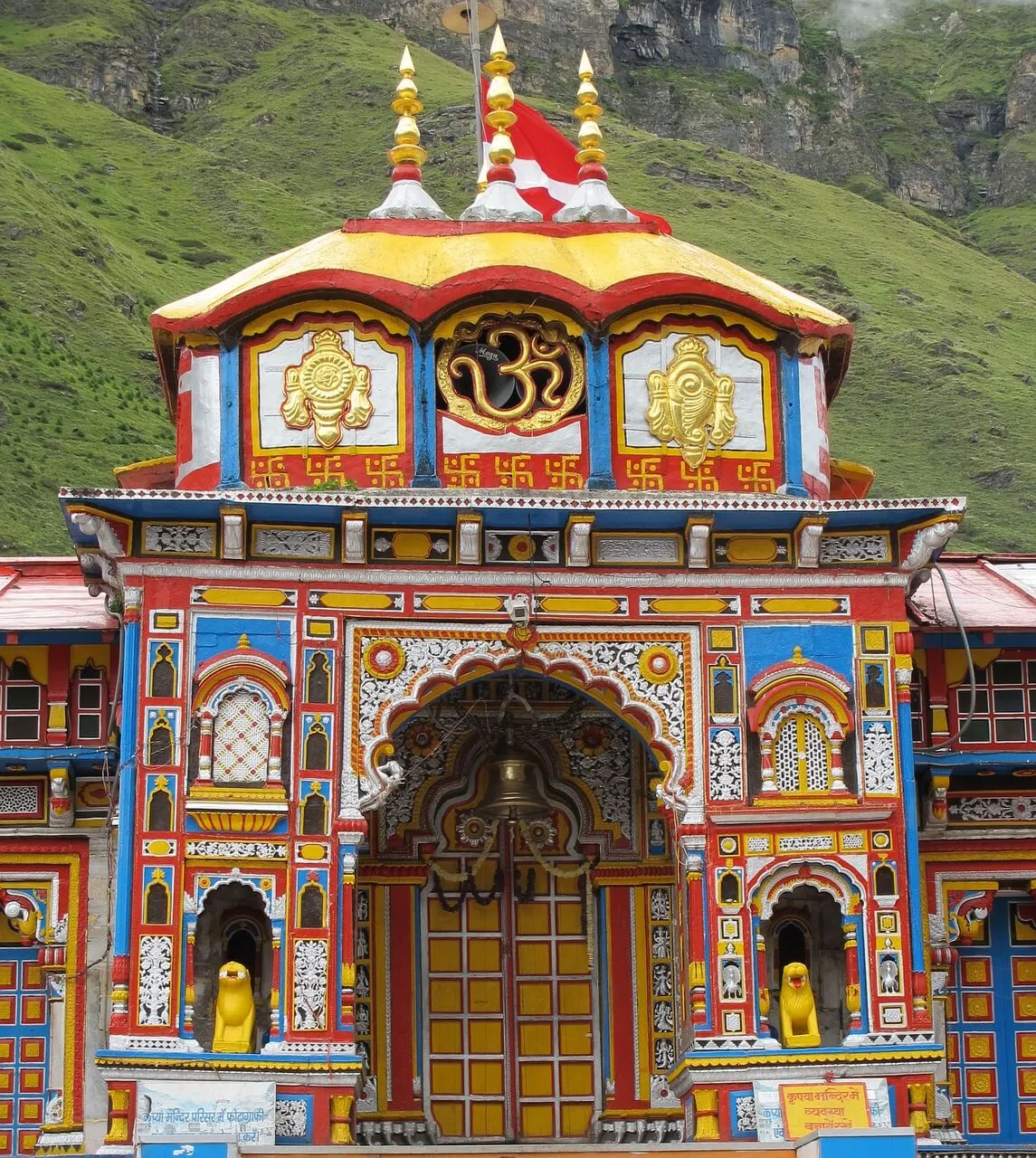
Hindu philosophy has always understood that human life is not random — it moves toward purpose, through rites, and ultimately toward liberation. Pilgrim's Habitat is designed to hold that understanding, not merely as décor, but as the very structure of how we welcome, nourish, and release each guest back into their journey.
The Four Purusharths · पुरुषार्थ चतुष्टय
Ancient Vedic thought identified four universal aims — Dharma, Artha, Kama, and Moksha — as the complete map of human aspiration. Every pilgrimage holds all four within it. At Pilgrim's Habitat, we have designed our hospitality so that each aim is actively supported, not left to chance.
Dharma is the cosmic law that governs right living — the inner imperative that tells a soul when it is time to stop, turn inward, and fulfil a sacred obligation. The very act of undertaking a Char Dham yatra is Dharma in motion. It is the devotee's response to a call that cannot be ignored.
Pilgrimage is not leisure. It is duty — to one's lineage, one's deity, and one's own dharmic path. When a pilgrim walks towards Badrinath, they are fulfilling one of the oldest obligations known to the Hindu tradition: the obligation of darshan.
Our staff understand that every guest is here on duty. Our Anugraha Concierge protects the sanctity of that duty — managing schedules, darshan bookings, and ritual logistics so that nothing interrupts the sacred purpose of the visit.
Artha is often misunderstood as mere wealth — but the Vedic tradition is more nuanced. Artha is the rightful pursuit of the means by which one's Dharma can be fulfilled. For a pilgrim, Artha is everything that enables the journey: the savings gathered, the transport arranged, the shelter secured, the logistics managed.
Without Artha — without proper physical preparation and resource — even the most devout Dharma cannot express itself fully. A pilgrim exhausted, misdirected, or inadequately sheltered cannot give their best to their devotion.
We are the Artha of your pilgrimage — the practical vessel that makes the spiritual possible. The Digital Darshan Concierge, Prasadam Cold Storage, heated Barefoot Transition Zones, and seamless shuttle loops exist so that the means never obstruct the meaning.
Kama is not merely desire in the mundane sense — it is the deepest, most legitimate longing of the soul for what is beautiful, whole, and divine. The Shrimad Bhagavata Purana teaches that the highest form of Kama is longing for God — and it is this longing, this ache of the spirit, that drives pilgrims across deserts and over mountain passes in search of a single, transforming glimpse.
Every pilgrim carries within them a Kama — a specific, personal yearning. For some it is healing. For others, gratitude. For others still, the fulfilment of a promise made in the depths of grief or fear.
Our Sattvic Dining at Akshaya, our Dhyana Meditation Pods, and our contemplative architecture are designed to honour that longing — to create the stillness in which Kama can crystallise into devotion rather than dissipate in distraction.
Moksha is the final, highest aim — liberation from the cycle of longing and loss, the experience of unity with the divine that transcends all seeking. Badrinath is one of the four sacred Dhams specifically identified in the Hindu tradition as gateways to Moksha — places where the veil between the human and the divine thins to near-transparency.
Moksha cannot be engineered — it can only be approached. But the conditions for that approach can be prepared with great care: physical purity, mental stillness, spiritual readiness, and the absence of distracting burdens.
The entire design of Pilgrim's Habitat — the ritual preparation suites, the silence zones, the sattvic nourishment, the proximity to the temple — is oriented toward the Moksha Moment: the step across the threshold of Badrinath temple, clean, rested, and fully present.
The Sixteen Samskaras · षोडश संस्कार
The Samskaras are the sixteen sacred rites of Hindu tradition that mark every major transition of a human life — from conception to cremation. The word itself comes from the Sanskrit root sam (complete, perfect) and kara (to make, to do) — meaning that which perfects the being.
Each Samskara is a purification — a deliberate act of consecration that lifts an ordinary passage of life into the realm of the sacred. Together, they form an unbroken thread of grace through the entire arc of a human existence.
"A pilgrimage is not merely one of the sixteen Samskaras — it is the living spirit of all of them, recalled and renewed. To undertake the Char Dham Yatra is to purify every Samskara one has already received, and to prepare for those yet to come."
The consecration of new life — the invocation of divine blessings before the soul enters the body. A declaration that life begins in sanctity.
DharmaPerformed in the third month of pregnancy to seek divine protection for the growing child and invite auspicious qualities into the soul.
DharmaThe hair-parting rite in the seventh month — a blessing for the mother and child, protecting them through the threshold of imminent birth.
KamaThe rites performed at the moment of birth — feeding the newborn honey and ghee, whispering the sacred sound into the ear, welcoming the soul into the world.
ArthaOn the tenth or twelfth day, the child receives its sacred name — an identity bound to the divine, a vibration it will carry through life.
DharmaThe child's first emergence into the outer world — carried to the temple, shown the sun and the sky, offered to the universe for the first time.
KamaThe ceremony of first nourishment — the child receives its first grain, blessed and offered. Purity of food is established as a sacred principle from the very beginning.
ArthaThe first cutting of the child's hair — releasing the karma of previous lives, consecrating the head as the seat of the divine, inaugurating a fresh beginning.
MokshaThe piercing of the ears as both a health rite and a spiritual opening — the ears, channels of sacred sound and mantra, are consecrated for a lifetime of listening to the divine.
DharmaThe child's formal entry into education — writing the sacred syllable Om for the first time, placing knowledge under divine protection.
ArthaOne of the most significant Samskaras — the investiture of the sacred thread, marking the second birth of the individual into spiritual life and the beginning of Vedic study.
DharmaThe formal commencement of Vedic learning under the Guru — the student receives the sacred texts as a living inheritance, not merely a collection of words.
ArthaThe young man's coming of age — the first ritual shave, marking the transition from boyhood into the full responsibilities of the householder's path.
DharmaThe graduation ceremony — the student's formal departure from the Gurukul, carrying the wisdom of the Vedas back into the world, ready to fulfil their Dharma.
ArthaMarriage as cosmic covenant — two souls bound not merely by social agreement but by fire, mantra, and the witnessing of the divine. The foundation of the householder's life.
KamaThe last Samskara — the consecration of the body at death, the release of the soul with honour, prayers, and the sacred fire. The final act of love one generation gives to another.
MokshaThe Samskaras are not merely historical events locked in the past — they are living imprints on the soul. Hindu tradition teaches that pilgrimage — particularly to one of the Char Dhams — has the power to revisit and purify every Samskara one has received, and to prepare the soul for those that are yet to come.
When a devotee undertakes the journey to Badrinath, they do not arrive as a blank slate. They arrive carrying every Samskara they have ever received — the weight of births and learnings, of unions and losses, of vows made and vows fulfilled. The act of pilgrimage becomes a collective renewal of all sixteen.
At Pilgrim's Habitat, we understand that our guests do not arrive merely as travellers. They arrive as beings in the midst of their Samskara journey — and we hold that understanding as our highest responsibility.
The ritual bathing at Tapt Kund before darshan mirrors the birth rites and tonsure — a cleansing that recalls the soul to its original purity, washing away the accumulations of ordinary life.
The hours of prayer, scripture recitation, and satsang at Badrinath re-enact the sacred investiture of knowledge — the pilgrim becomes, for those days, a student once more at the feet of the divine.
Many pilgrims undertake the Char Dham Yatra in the knowledge that they approach the end of life. For them, Badrinath is the living Antyesti — the most sacred preparation for the final passage.
The Complete Journey
We did not build Pilgrim's Habitat to accommodate tourists. We built it to honour pilgrims — souls in the midst of the most ancient and serious business of human life: the pursuit of liberation.
The four Purusharths tell us why you are here. The sixteen Samskaras tell us what you carry. Together, they tell us exactly what our hospitality must be: not comfort as an end, but comfort as a consecration — every warm meal a Sattvic blessing, every prepared room a ritual threshold, every concierge interaction an act of Dharmic service.
This is the concept. This is the vow. This is Pilgrim's Habitat.
Explore Royal Badri
A sanctuary for the faithful traveller, nestled at the gateway to Shri Badrinath Dham. Where devotion meets comfort.