

Pind Daan at Brahma Kapal Badrinath: Complete Ritual Guide & Pilgrim Stay 2026
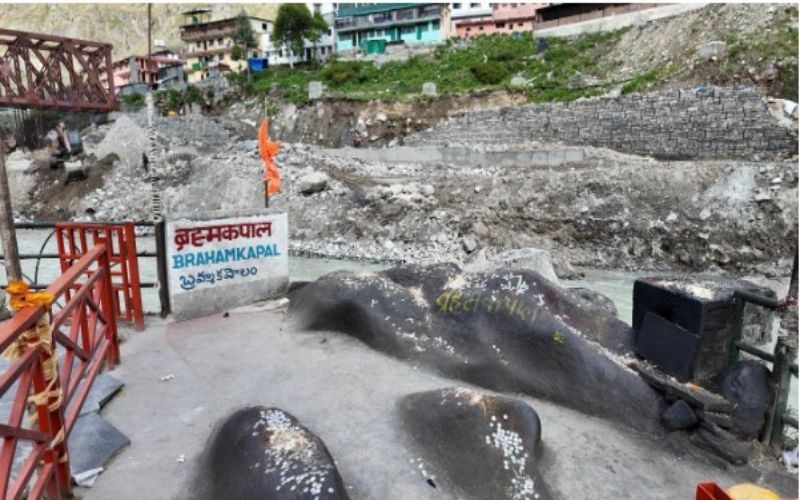
Pind Daan at Brahma Kapal in Badrinath is considered the most powerful ancestral rite in Hinduism — one where departed souls attain permanent Moksha, requiring no repeated rituals elsewhere. Brahma Kapal Ghat sits on the banks of the Alaknanda river, approximately 750 metres from Hotel Royal Badri, and is the only location in the Char Dham circuit specifically sanctioned by the Skanda Purana and Vishnu Purana as the ultimate Mahatirtha for ancestral rites. This guide covers the spiritual significance, the complete step-by-step ritual sequence, exactly what to bring, how to book a Purohit, and why Hotel Royal Badri is the right base for this deeply personal pilgrimage.
Brahma Kapal Pind Daan: Quick Reference
Question | Direct Answer |
Where is Brahma Kapal? | On the Alaknanda river bank, ~750 metres from Hotel Royal Badri, adjacent to the Badrinath Temple complex. |
Why is Brahma Kapal special? | It is the only site where Pind Daan is considered final — ancestors attain permanent Moksha, not just temporary relief. |
Best time for the ritual | Early morning, 6:00 AM–11:00 AM; or during Pitrupaksha (September–October in the yatra season). |
How long does it take? | The core ritual takes 1–2 hours; 2.5–3 hours if combined with Tapt Kund bath and Badrinath Temple darshan. |
Do I need to book a Purohit? | Yes — especially during peak season (May–June) and Pitrupaksha. Hotel Royal Badri’s Anugraha Concierge arranges this. |
Can women perform Pind Daan? | Yes. Daughters and female family members can initiate the Sankalpa when no direct male heir is present. |
What Makes Brahma Kapal the Supreme Site for Pind Daan in Hinduism?
The Skanda Purana and Vishnu Purana specifically identify Brahma Kapal Ghat as the ultimate Mahatirtha — the most powerful crossing point — for ancestral rites among all sacred sites in India. The name itself carries profound meaning: ‘Brahma’ (the creator deity) and ‘Kapal’ (skull). According to the Shiva Purana, Lord Shiva struck off one of Brahma’s five heads in a moment of cosmic conflict, and the skull adhered to his palm as a mark of the act. This skull only fell at this precise spot on the Alaknanda’s bank in Badrinath — conferring exceptional spiritual authority on the location for all rites concerned with death, liberation, and the transition between worlds.
Unlike Pind Daan performed at Gaya, Prayagraj, or Varanasi, which provide relief and merit to departed souls, the rite at Brahma Kapal is understood to be final. Pilgrims who perform this ritual for their ancestors here believe they grant permanent Moksha — liberation from the cycle of rebirth — regardless of the circumstances of the ancestor’s death. This is why families travel specifically to Badrinath for this purpose, often combining it with the Char Dham circuit as the most complete ancestral act a family can perform in a single pilgrimage.
Brahma Kapal and Pitru Dosh Relief
Families experiencing Pitru Dosh — astrological affliction linked to unsatisfied ancestral souls — consider Brahma Kapal one of the most effective sites for its resolution. The Pitru Dosh, noted in a family member’s birth chart when malefic planets occupy the 9th house or when Saturn and Rahu combine with the Sun or Moon, is traditionally associated with persistent family difficulties attributed to unresolved ancestral karma. Performing Pind Daan and Tarpan at Brahma Kapal, under the guidance of a qualified Purohit, is considered among the most authoritative remedies in the Vedic tradition.
The ghat also serves families whose ancestors died under difficult circumstances: those who died away from home, those whose last rites were not completed, those who died young or by accident. The Brahma Kapal tradition specifically accommodates these cases — the Purohit’s Sankalpa (declaration) includes the full scope of the family lineage and the specific circumstances requiring resolution.
Step-by-Step Guide: How the Brahma Kapal Pind Daan Ritual Works
Follow this sequence on the morning of your ritual — Hotel Royal Badri’s Anugraha Concierge coordinates each step in advance so nothing is improvised on the day itself.
- Purification bath at Tapt Kund (6:00–6:30 AM). Begin at the sacred sulphur hot springs approximately 800 metres from Hotel Royal Badri. A ritual dip at Tapt Kund purifies the pilgrim before approaching the ancestral ghat. The water temperature is a consistent 55°C — cleansing in the cold early morning air. Wear minimal jewellery and bring a change of dry clothes.
- Proceed to Brahma Kapal Ghat (approximately 100 metres from Tapt Kund). The flat rock platform is clearly visible on the Alaknanda bank — Purohits maintain stations at the ghat and are identifiable by their white attire and the ritual items they keep at their spots.
- Sankalpa — Declaration of Family Lineage. The Purohit initiates the ceremony by taking your family’s Gotra name and the full names of all departed ancestors for whom the rite is being performed. He then recites a formal Sankalpa — a Vedic declaration — specifying the intent, the family lineage, and the souls being addressed. This Sankalpa is what makes the ritual personally binding rather than generic.
- Pinda Preparation and Tarpan. The Purohit prepares the Pindas — offerings made of cooked rice, barley flour (jau ka atta), black sesame seeds (kale til), pure cow’s ghee, honey, and holy water drawn from the Alaknanda. Each Pinda represents the body of a departed ancestor. Vedic mantras accompany every step of the preparation.
- Tarpan — Water Offering. The family’s senior male (or daughter, if she is the initiating member) offers water from the Alaknanda using a copper vessel while the Purohit recites Vedic mantras. Each Tarpan is dedicated to a specific ancestor, named by the Purohit during the recitation.
- Immersion of Pindas into the Alaknanda. The prepared Pindas are offered into the flowing river — the act of release that is understood to complete the ancestral journey toward Moksha. The moment of immersion is often described by pilgrims as the most emotionally significant point of the entire Badrinath visit.
- Darshan at Badrinath Temple. The ritual sequence concludes with darshan at the Badrinath Temple, approximately 100–150 metres from Brahma Kapal. Performing darshan immediately after Pind Daan, while in a state of ritual purity and emotional openness, is considered the most complete expression of the Badrinath pilgrimage.
Practical Pilgrim Checklist for Brahma Kapal Pind Daan
Preparation Item | Details & Tips |
Best timing | Early morning, 6:00–11:00 AM, to complete the full circuit (Tapt Kund → Brahma Kapal → Temple darshan) before the midday temple closure at 12:00 PM. |
During Pitrupaksha | The Pitrupaksha fortnight (September–October) is the most auspicious period for ancestral rites. Book Purohit and hotel 6–8 weeks ahead for these dates. |
Attire | Clean white or light-coloured traditional clothing. Dhoti and Kurta for men; Saree or Salwar Suit for women. Avoid synthetic fabrics; cotton is preferred. |
Gotra and ancestor information | Prepare a written list: Gotra name, full names of all departed ancestors, death dates (if known), and the relationship to the living performer. |
Items to carry to the ghat | Flowers (marigold or white), incense sticks, camphor. The Purohit provides Pinda ingredients and vessels — confirm this when booking. |
Cash for Dakshina | Keep cash on hand for Pandit Dakshina and any ritual items sourced locally. Digital payment is unreliable at the ghat. Typical Dakshina ranges from ₹1,500–₹5,000 depending on the scope of the rite. |
Photography | Photography of the ritual itself is generally discouraged — it is a sacred and often emotional ceremony. Ask the Purohit’s guidance before taking any photos at the ghat. |
Return meal | Plan for a warm Sattvic meal at Hotel Royal Badri’s Akshaya Restaurant immediately after the ritual — the physical and emotional effort of the morning is significant. |
Puja Samagri: What to Bring for Pind Daan at Brahma Kapal
The Purohit at Brahma Kapal typically provides the core Pinda ingredients as part of the ritual arrangement — but confirm this when booking. The standard items prepared for the ritual include:
- Barley flour (jau ka atta) or cooked rice — for forming the Pindas
- Black sesame seeds (kale til) — essential for every Tarpan offering
- Pure cow’s ghee — used in preparing the Pindas and in the fire offerings
- Honey and milk — mixed with the Pinda preparation
- Kusha grass (dharba) — used by the performer during Tarpan
- Copper or brass vessel (lota) — for Tarpan water drawn from the Alaknanda
- Fresh flowers — marigold and white flowers for the ghat offering
- Incense sticks and camphor — for the opening invocation
- Cash Dakshina (₹1,500–₹5,000) — for the Purohit on completion
Puja Samagri kit assistance: Hotel Royal Badri’s Anugraha Concierge pre-arranges puja samagri kits for guests performing Pind Daan — including all core items above assembled and ready for the morning of the ritual. Request this at booking or at the front desk the evening before. This removes the need to source items from local vendors in the cold pre-dawn hours.
Why Choose Pilgrims Habitat for Your Brahma Kapal Pilgrimage?
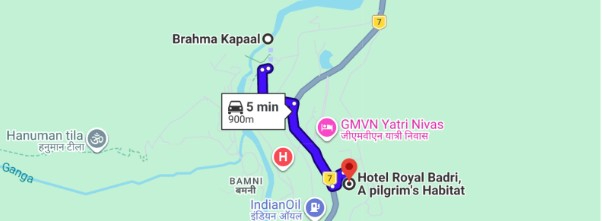
Hotel Royal Badri – A Pilgrim’s Habitat is 750 metres from Brahma Kapal Ghat — the closest full-service, heated, Sattvic-dining hotel to the ancestral ritual site in Badrinath. For a pilgrimage that begins at 5:30 AM in cold mountain air and carries significant emotional weight, proximity and preparation make a genuine difference.
What Hotel Royal Badri provides specifically for Pind Daan pilgrims:
- 750 metres walking distance to Brahma Kapal Ghat — no vehicle needed at 5:30 AM, no early taxi hassle in the cold
- Anugraha Concierge for Purohit arrangement, puja samagri kit preparation, and ritual timing coordination — everything confirmed the evening before
- 24/7 hot water and in-room heaters — critical for refreshing after the Tapt Kund dip and returning to warmth after the ritual
- Sattvic Akshaya Restaurant for a post-ritual meal — pure vegetarian, no onion or garlic, prepared to the dietary standards expected during ancestral pilgrimage
- Ground-floor rooms and senior-friendly access — for elderly family members for whom every step of the morning walk matters
- Flexible late check-out for families finishing extended rituals or combining Pind Daan with afternoon temple darshan
- Ambar Sky Cafe for quiet reflection after the ceremony — mountain views over the Alaknanda with warm tea
Anugraha Concierge: How Hotel Royal Badri Supports Your Ritual
The Anugraha Concierge is the Pilgrims Habitat service that makes the difference between a stressful early morning and a seamlessly prepared ritual day. Here is what the concierge arranges for Brahma Kapal pilgrims:
Service | What It Covers |
Verified Purohit arrangement | Direct connection with trusted, locally registered Pandas/Purohits at Brahma Kapal — avoiding peak-season confusion or unverified ghat approaches. Arranged with 1 day’s notice. |
Puja Samagri kit | Pre-assembled ritual kit (sesame, kusha grass, barley, copper vessel, flowers, ghee) prepared and placed in your room the evening before. |
Ritual timing coordination | Anugraha team confirms the best Purohit availability slot for your travel dates and aligns it with Tapt Kund and temple darshan timings. |
Early breakfast arrangement | Akshaya Restaurant prepares an early Sattvic breakfast from 5:30–6:00 AM on request for pilgrims departing for the morning circuit. |
Flexible check-out | Extended check-out to 2:00–3:00 PM for families completing late-morning rituals and afternoon darshan. |
Post-ritual logistics | Concierge recommends the optimal sequence for the return circuit and flags any temple timing changes on the day. |
Related Pilgrimage Guides From Pilgrims Habitat
Further reading for your Badrinath ancestral pilgrimage:
· Badrinath Puja & Pind Daan Guide – Costs, Rituals & Nearby Stay
· Tapt Kund & Brahma Kapal Walking Tour
· VIP Darshan at Badrinath Temple
· Senior Citizens Guide to Badrinath Yatra
· Best Time to Visit Badrinath
· Hotel Royal Badri – Rooms & Booking
Frequently Asked Questions About Pind Daan at Brahma Kapal
Yes. Under the guidance of local Purohits, daughters and female family members can initiate the Sankalpa and perform the Pind Daan when no direct male heir is present or when the family chooses to have a female member lead the ritual. The Purohit adapts the Sankalpa accordingly. Ask Hotel Royal Badri’s Anugraha Concierge to communicate this requirement to the Purohit during the arrangement.
The core Pind Daan ceremony at the ghat takes between 1 and 2 hours, depending on the number of ancestors included in the Sankalpa. Combined with the purification dip at Tapt Kund (15–20 minutes) and darshan at Badrinath Temple (30–90 minutes depending on queue), the complete morning circuit runs 2.5–4 hours. Depart Hotel Royal Badri by 5:30–6:00 AM to complete the full circuit before the temple’s midday closure at 12:00 PM.
While not formally mandatory, booking your Purohit in advance is strongly recommended — especially during peak season (May–June) and Pitrupaksha (September–October), when experienced Purohits at Brahma Kapal are in high demand. Hotel Royal Badri’s Anugraha Concierge books verified Purohits with 24 hours’ notice. For Pitrupaksha dates specifically, request the Purohit 3–5 days in advance.
Gaya (in Bihar) is the most widely known site for Pind Daan and is associated with Lord Vishnu’s sacred footprint — rites there provide significant merit to departed souls. Varanasi (on the Ganga) is considered deeply powerful for souls who die in the city. Brahma Kapal in Badrinath is unique because the scriptural tradition considers the rite here final — a permanent grant of Moksha — rather than a periodic or cyclical ritual. Many families perform Pind Daan at multiple sites, but Brahma Kapal is often the culminating act.
Pitru Dosh (also spelled Pitru Dosha) is an astrological condition noted in a birth chart when planets indicate unsatisfied ancestral souls — often manifesting as persistent family difficulties, delays in marriage, child-related concerns, or unexplained health issues across generations. The Vedic tradition prescribes Pind Daan and Shraddha at the most powerful Mahatirthas for its resolution. Brahma Kapal, as the scriptural Mahatirtha for ancestral rites, is considered one of the most authoritative remedies — pilgrims should discuss the specific conditions of their Pitru Dosh with the Purohit during the Sankalpa so it is explicitly addressed.
A written list of all ancestors’ names and Gotra, cash for Dakshina (₹1,500–₹5,000; no ATM at the ghat), a change of dry clothes for after the Tapt Kund dip, a copper or brass lota if not provided by your Purohit, fresh flowers, and a warm outer layer for the cold early morning. Hotel Royal Badri’s Anugraha Concierge prepares a puja samagri kit on request — this covers sesame, barley, kusha grass, and vessels.
Yes — Brahma Kapal Ghat is a short, mostly flat walk from the main road. The stone steps to the ghat level require some care (use the railings; wear non-slip footwear). For pilgrims who cannot manage the steps independently, palki and doli carriers operate near the temple complex and can be arranged through Hotel Royal Badri’s Anugraha Concierge the evening before. Hotel Royal Badri’s ground-floor room options and in-room heating make the return from the cold early morning ritual as comfortable as possible.
Brahma Kapal Ghat is accessible from approximately 5:30–6:00 AM onwards. Purohits arrive at the ghat from early morning. The optimal ritual window is 6:00–11:00 AM — both because morning is considered most auspicious for ancestral rites and because this allows completion before the midday temperature dip and before the main temple queue builds for afternoon darshan.
Book Your Brahma Kapal Pilgrimage Stay at Hotel Royal Badri
Hotel Royal Badri – A Pilgrim’s Habitat is 750 metres from Brahma Kapal Ghat — the closest full-service, Anugraha Concierge–supported property to the sacred ancestral site. We arrange your Purohit, prepare your puja samagri kit, coordinate the morning ritual sequence, and ensure you return to a warm room and a Sattvic breakfast. The ritual deserves your full presence — let our team handle everything else.
Book Your Stay Near Brahma Kapal · Request Pandit & Samagri Assistance · Call / WhatsApp: 87960 35148 · Email: reservations@pilgrimshabitat.com
Delhi Office: Unit no. 6, Tribhuwan Complex, Ishwar Nagar, Friends Colony, Delhi – 110065 | Business enquiries: Manish.kumar@pilgrimshabitat.com | +91-8796035148
All Ccategories
Recent Post
-
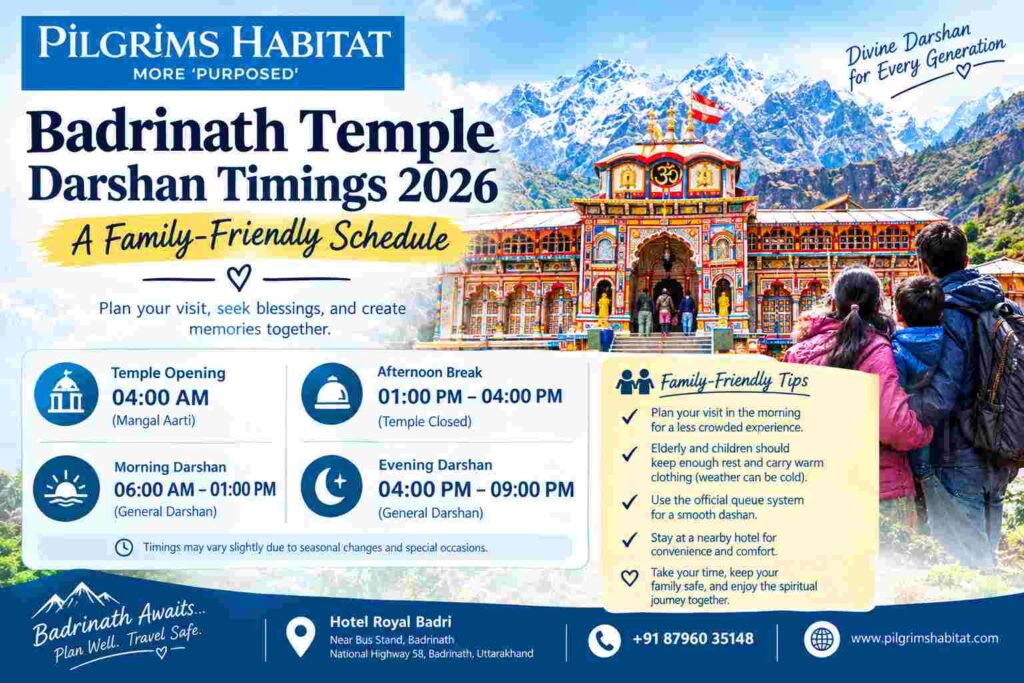 23 Sep 2026 UncategorizedBadrinath Temple Darshan Timings 2026: A Family-Friendly Schedule
 -
 22 Sep 2026 UncategorizedBest Place to Stay in Badrinath for Pilgrims With Health Conditions (2026)
 -
 21 Sep 2026 Badrinath HotelsBadrinath Hotel Amenities Families Actually Need (2026 Checklist)
 -
 19 Sep 2026 UncategorizedStay Near Temple in Badrinath: Why Walking Distance Matters Most After 60
 -
 18 Sep 2026 Badrinath Travel GuideBadrinath Hotel Contact and Booking Help for Elderly Pilgrims Travelling Alone (2026)

One Response