

Badrinath vs Joshimath: Where Should You Stay During Your Char Dham Trip?
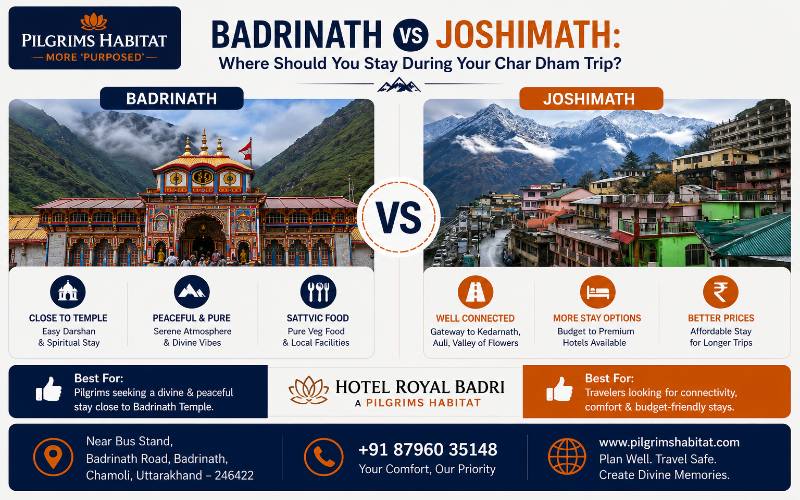
When planning your Char Dham Yatra, one practical question matters: should you stay in Badrinath vs Joshimath? Both have advantages, and the right choice depends on your priorities—temple access, altitude, town facilities and overall convenience.
If Badrinath Temple darshan is your main purpose, staying in Badrinath can save significant road travel on darshan day. Joshimath is a better option if you prefer lower altitude and more everyday facilities. At Pilgrims Habitat, we believe the best choice is the one that fits your travel needs.
Badrinath vs Joshimath: Which Is Better for Your Stay?
Factor | Badrinath | Joshimath |
Best suited for | Temple-focused pilgrims | Travellers prioritising town facilities |
Approx. elevation | 3,100 m | 1,875 m |
Temple access | Close to the temple | Requires road travel to Badrinath |
Early morning darshan | More convenient | Requires an early departure |
Facilities | More pilgrimage-focused | More shops and everyday services |
Accommodation | Smaller, pilgrimage-oriented selection | Wider range of hotels |
Best for | 1–2 nights around darshan | Longer transit or broader itinerary |
Main advantage | Proximity to Badrinath Temple | Lower altitude and developed town facilities |
The simple answer: if you want to spend your Badrinath day around the temple with less road travel, stay in Badrinath. If lower elevation and access to broader town facilities matter more, Joshimath can be the more practical base.
Why Stay in Badrinath?
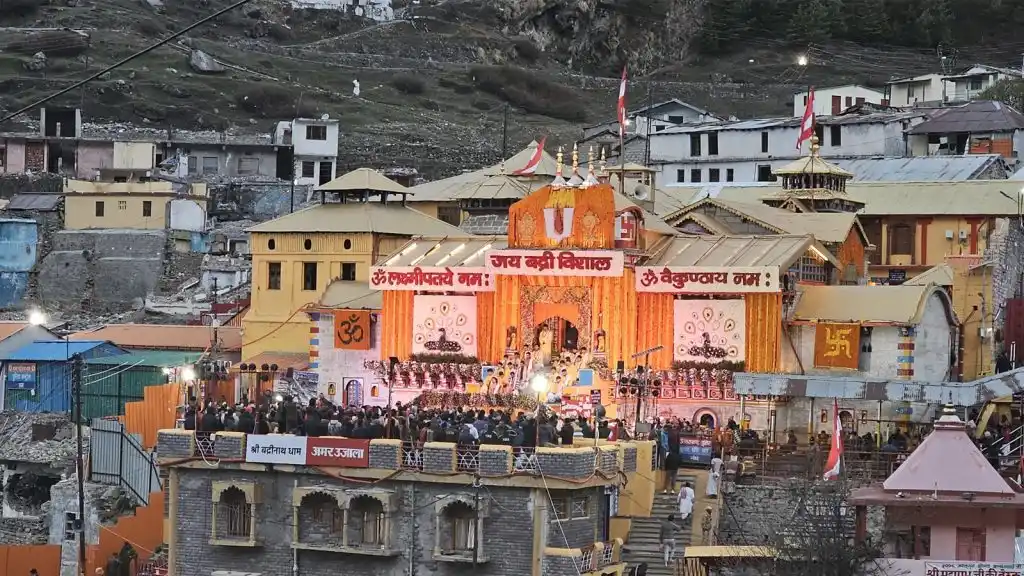
When Badrinath Temple darshan is your main priority, staying in Badrinath keeps you close to where you actually want to be. You avoid starting your darshan day with another long mountain drive from Joshimath.
This is especially useful for early temple visits. You can wake up, get ready, walk towards the temple and return to your hotel to rest without adding another road journey to your schedule.
Key Advantages of Staying in Badrinath
- Stay Close to Badrinath Temple
You are already near the pilgrimage centre, making temple visits easier to plan. For a darshan-focused trip, this can matter more than having a larger market nearby. - Avoid Extra Travel on Darshan Day
Mountain roads, traffic and yatra-season movement can make even a 45 km journey tiring. Staying in Badrinath means you can remove this additional commute from your temple-day plans. - More Convenient for Families
Travelling with parents, children, or a larger group becomes easier when you do not have to make another long drive after darshan. Once your temple visit is over, you can return to your hotel and rest. - Make Better Use of a Short Stay
If you have only one or two nights in Badrinath, staying nearby gives you more time for darshan and nearby pilgrimage activities instead of spending several hours travelling between Joshimath and Badrinath.
Things to Consider Before Staying in Badrinath
Badrinath also comes with a few practical considerations. It is at a higher altitude with colder weather and has fewer general-purpose facilities than Joshimath.
- Higher altitude and colder nights
- Fewer shops and everyday facilities
- Limited accommodation compared with Joshimath
- Accommodation can cost more during peak yatra periods
- Booking is advisable during peak yatra periods
If you prefer a lower-altitude stay with more town facilities, Joshimath may suit you better. But if temple proximity and a convenient darshan routine are your priorities, staying in Badrinath is worth considering.
Why Do Some Travellers Prefer Joshimath?
Joshimath offers a different kind of convenience. At around 1,875 metres, it is considerably lower than Badrinath and functions as an important town and travel base in the region.
You will generally find more everyday services here, including shops, pharmacies, eateries and other town facilities. That makes Joshimath attractive when Badrinath is only one stop within a wider Uttarakhand itinerary.
Advantages of Staying in Joshimath
- Lower elevation than Badrinath.
- A broader choice of accommodation.
- More shops and everyday services.
- Easier access to general town facilities.
- Useful if you are combining Badrinath with other destinations.
- Suitable if you prefer a developed town environment rather than staying directly in a pilgrimage centre.
For some travellers, these benefits outweigh the inconvenience of travelling to Badrinath for darshan.
The Main Disadvantage: The Extra Road Journey
The key trade-off is that Joshimath is about 45 km from Badrinath, usually taking around 2–2.5 hours by road each way. Mountain traffic, road conditions and pilgrimage-season movement can make the journey longer.
If you are staying in Joshimath and planning an early visit to Badrinath, you need to build the road journey into your morning schedule. After darshan and other temple activities, you then have the return journey to Joshimath.
So, Joshimath can be the better town base, but Badrinath can be the better pilgrimage base.
Badrinath or Joshimath: Which Should You Choose?
There is no single answer for every Char Dham traveller. Your choice should depend on what you expect from the Badrinath portion of your journey.
Choose Badrinath If You:
- Want Badrinath Temple darshan to be your primary focus.
- Prefer staying close to the pilgrimage centre.
- Have limited time.
- Want to avoid an additional mountain drive on darshan day.
- Are travelling with parents or a family group.
- Want easier access for early temple visits.
- Prefer returning to your room quickly after a tiring day.
- Want to experience the atmosphere of Badrinath itself.
Choose Joshimath If You:
- Prefer staying at a lower elevation.
- Want more town-level facilities nearby.
- Need access to a wider selection of shops and services.
- Are using Joshimath as a base for multiple destinations.
- Do not mind travelling to Badrinath for temple visits.
The decision becomes much easier when you stop asking which town is universally “better” and instead ask which location makes your particular itinerary easier.
Why Temple Proximity Matters During a Badrinath Yatra
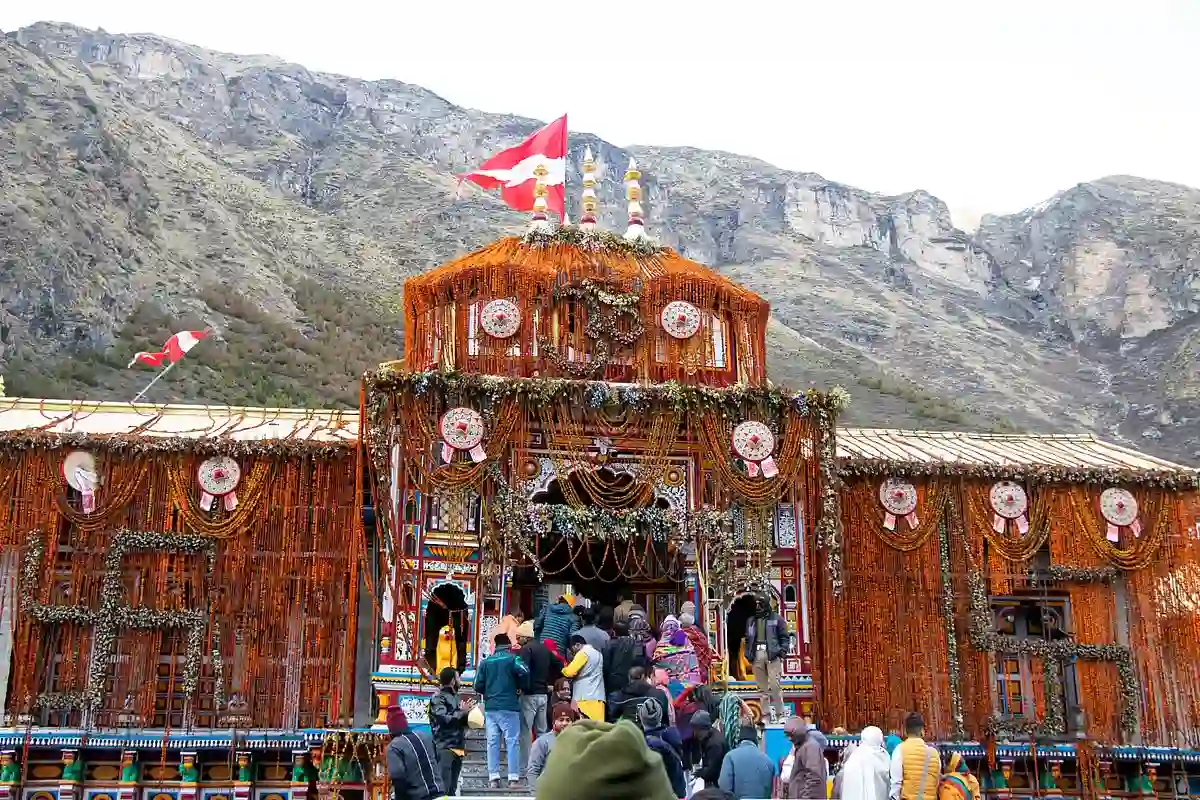
For a regular holiday, a 40–45 km drive may not seem like a major issue. A pilgrimage day is different. You may already have spent hours travelling through the mountains, followed by temple queues, walking and changing weather conditions.
That is why proximity matters more than it initially appears.
When you stay near Badrinath Temple, you have greater control over your schedule. You can prepare for darshan without first arranging a longer road journey, and once your temple visit is complete, you can return to your accommodation rather than immediately beginning another mountain drive.
For families and senior travellers, that convenience can be especially meaningful. You still need to account for Badrinath’s altitude and cold conditions, but you can remove one unnecessary source of travel fatigue.
Why We Recommend Hotel Royal Badri – A Pilgrim's Habitat
If you decide that staying in Badrinath suits your itinerary, the next question is naturally: where should you stay?
At Hotel Royal Badri – A Pilgrim’s Habitat, we have built our stay experience around what pilgrims actually need during the Badrinath leg of their journey: convenient temple access, comfortable rooms, suitable dining and assistance during their stay.
Around 900 Metres from Badrinath Temple
We are located approximately 900 metres from Badrinath Temple, making it easier to plan darshan without arranging a separate journey from Joshimath. You can walk to the temple and return to the hotel when you need to rest.
Planning to stay near Badrinath Temple? Check room availability for your dates.
41 Rooms with Winter Comfort
Our 41 rooms provide a comfortable base for families and pilgrimage groups. To make cold Badrinath nights easier, rooms include heating, electric blankets and 24/7 hot water.
Pure Sattvic Dining at Akshaya
At Akshaya, we offer pure Sattvic dining within the property, giving pilgrims a convenient option for suitable meals after travel and darshan.
Unwind at Ambar Sky Cafe
After a temple visit, Ambar Sky Cafe offers a relaxed space to sit, enjoy the mountain surroundings and spend some quiet time at the property.
Anugraha Concierge for Pilgrims
Our Anugraha Concierge assists with practical pilgrimage needs, helping you manage local arrangements more easily and focus on your yatra.
Hotel Royal Badri vs Staying in Joshimath
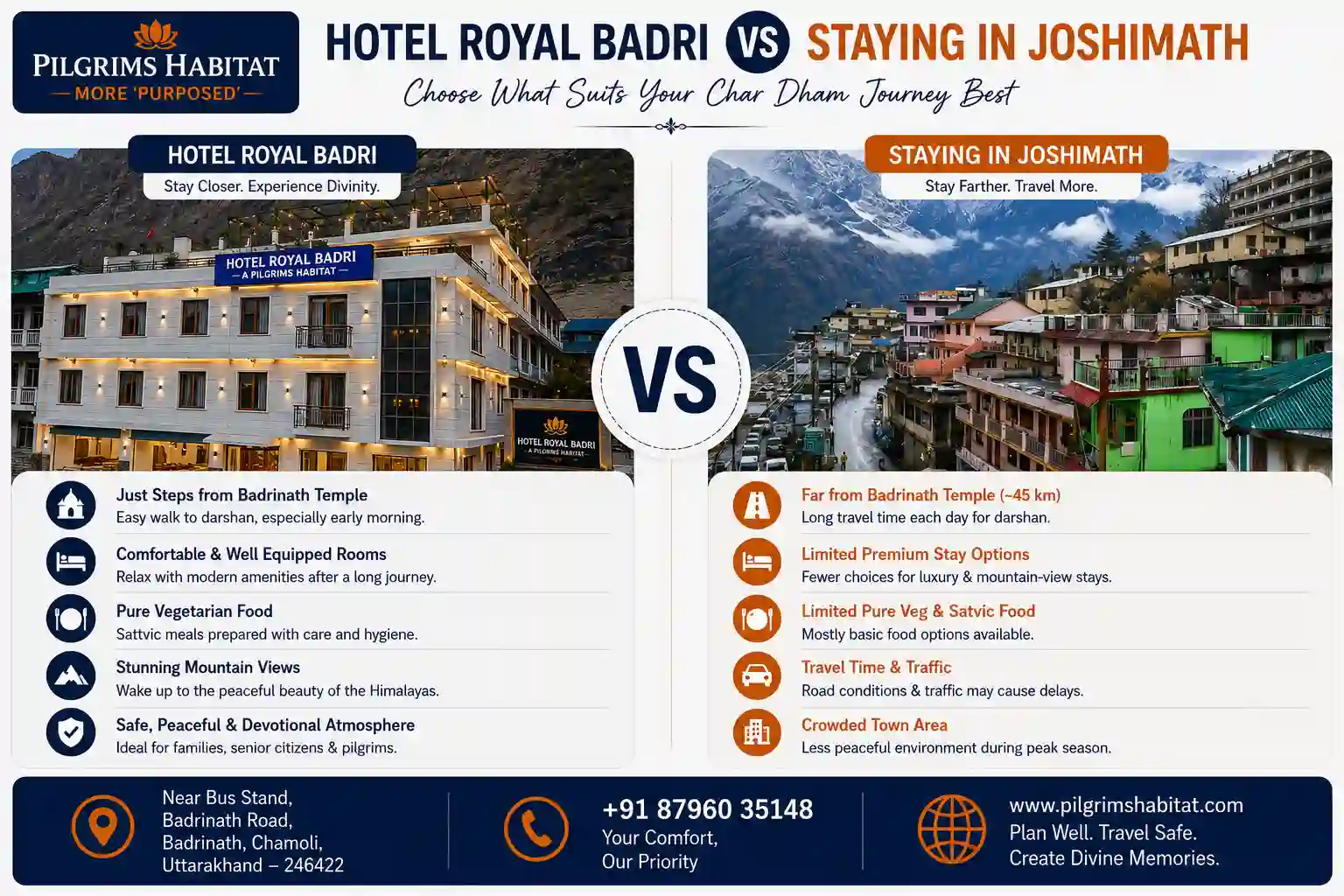
Consideration | Hotel Royal Badri, Badrinath | Stay in Joshimath |
Temple proximity | Approx. 900 m walk | Requires road travel |
Darshan planning | Convenient from Badrinath | Requires early travel planning |
After darshan | Return to nearby accommodation | Travel back to Joshimath |
Dining | Sattvic dining at Akshaya | Depends on the property |
Pilgrim support | Anugraha Concierge | Depends on the hotel |
Rooms | 41 rooms | Varies by hotel |
Best suited for | Temple-focused stays | Town-based itineraries |
This is ultimately the difference between the two choices: Joshimath gives you the advantages of a lower-altitude town, while staying in Badrinath puts the pilgrimage destination itself at the centre of your stay.
What Should You Check Before Booking a Badrinath Hotel?
Before confirming any accommodation, look beyond the hotel name and check the practical details.
- Temple distance: Check the actual walking distance rather than relying only on phrases such as “near the temple.”
- Room comfort: Confirm the room facilities that matter to you, particularly for cold-weather stays.
- Dining: If you have specific dietary preferences, check whether suitable food is available at the property.
- Family requirements: Consider your group size, room configuration and how much walking your family is comfortable with.
- Availability: Badrinath stays can become busy during the pilgrimage season, so planning is sensible.
- Guest assistance: A property with relevant local support can make unfamiliar mountain logistics easier.
Frequently Asked Questions
Yes, you can travel by shared taxis, local vehicles or private cabs, but availability and timings can vary with the season and road conditions. For early darshan, staying in Badrinath avoids depending on morning transportation.
It can be tiring because the 45 km journey may take around 2–2.5 hours. Staying in Badrinath makes early temple visits much easier.
It can be, especially during peak yatra periods. However, you should also consider the additional transportation cost and travel time when staying in Joshimath.
Joshimath offers a lower altitude, while Badrinath reduces travel on darshan day. Consider your family’s altitude tolerance and travel comfort before deciding.
Check temple distance, heating, hot water, dining, room availability and pilgrim assistance rather than comparing room prices alone.
One night can work for a tight itinerary, while two nights provide more time for darshan, rest and nearby visits.
All Categories
Recent Post
-
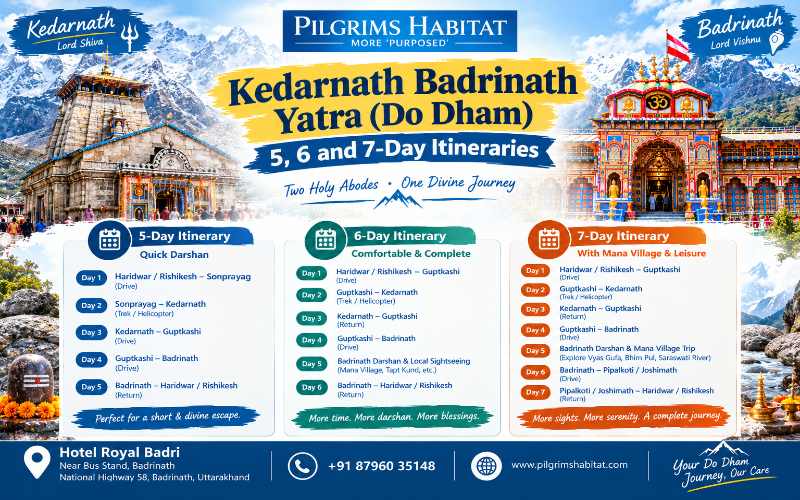 15 Oct 2026 UncategorizedKedarnath Badrinath Yatra (Do Dham): 5, 6 and 7-Day Itineraries
 -
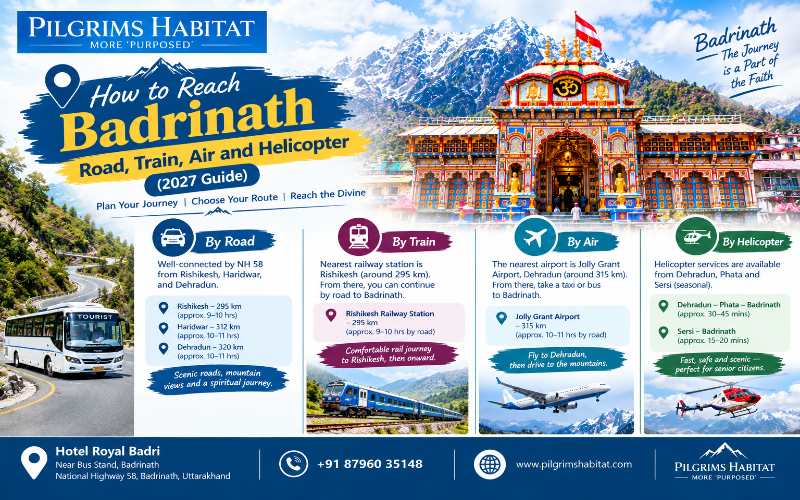 14 Oct 2026 UncategorizedHow to Reach Badrinath: Road, Train, Air and Helicopter (2027 Guide)
 -
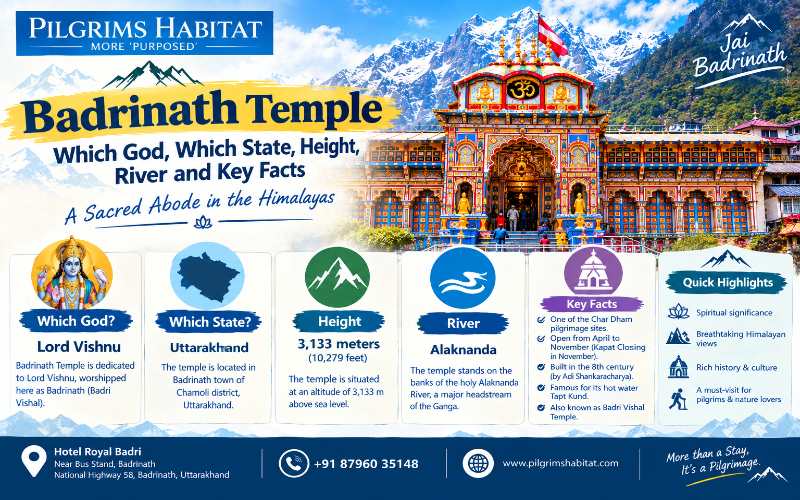 13 Oct 2026 UncategorizedBadrinath Temple Facts : Which God, Which State, Height, River
 -
 30 Sep 2026 Badrinath Travel GuideBadrinath Hotel WiFi and Mobile Network: What NRIs Should Know Before They Go
 -
 30 Sep 2026 Badrinath HotelsBadrinath Hotel With Mountain View: A Photographer's Guide to Rooms, Light and Timing
Final Verdict: Badrinath or Joshimath?
Choose Joshimath if you prefer lower altitude, more town facilities and a convenient base for exploring the region.
Choose Badrinath if your priority is temple darshan, less road travel and more time at the pilgrimage destination. At Pilgrims Habitat, we make that choice easier with Hotel Royal Badri – A Pilgrim’s Habitat, located approximately 900 metres from Badrinath Temple, with 41 rooms, Sattvic dining at Akshaya, Ambar Sky Cafe and Anugraha Concierge support.
Planning your Badrinath stay? Share your dates, guests and room requirements with us to check availability.

4 Responses