

Badrinath Temple Fact: Which God, Which State, Height, River
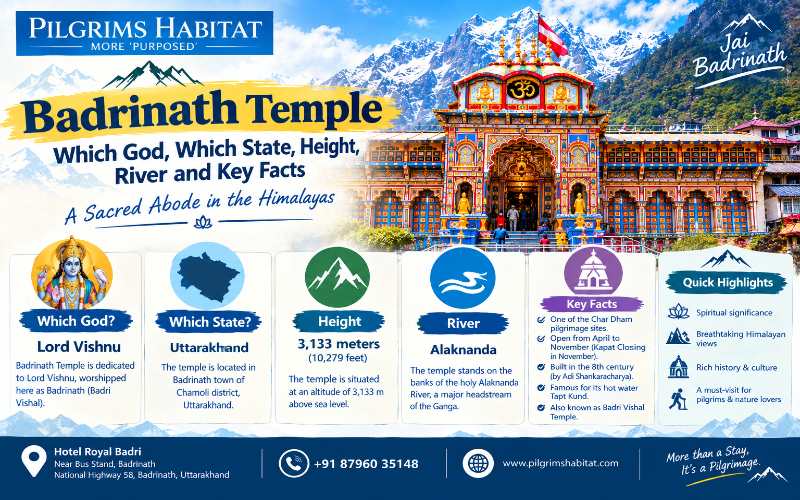
Some Badrinath Temple Fact : Badrinath temple is dedicated to Lord Vishnu, worshipped here as Badrinarayan. It stands in Badrinath town, Chamoli district, Uttarakhand, at about 3,133 metres (10,279 ft) above sea level, on the bank of the Alaknanda river between the Nar and Narayan mountain ranges. It’s one of the Char Dham and one of the 108 Divya Desams of Vishnu.
Those are the questions people type into Google most often. Below, each one gets a short, direct answer, followed by the context a pilgrim actually needs.
Badrinath temple at a glance
Question | Answer |
|---|---|
Which god? | Lord Vishnu as Badrinarayan (Badri Vishal) |
Which state? | Uttarakhand, India |
Which district? | Chamoli |
Altitude | About 3,133 m (10,279 ft) |
River | Alaknanda |
Mountains | Between Nar Parbat and Narayan Parbat; Neelkanth peak (6,596 m) rises behind |
Idol | About 1 ft tall, black Shaligram stone, seated in meditation |
Temple height | Sanctum roof about 15 m (49 ft) |
Managed by | Shri Badrinath-Kedarnath Temple Committee (BKTC) |
Open | Roughly late April/May to November |
Winter seat | Narsingh temple, Joshimath (Jyotirmath) |
Pilgrim circuits | Char Dham, Chota Char Dham, 108 Divya Desams, Panch Badri |
Which god is in Badrinath temple?
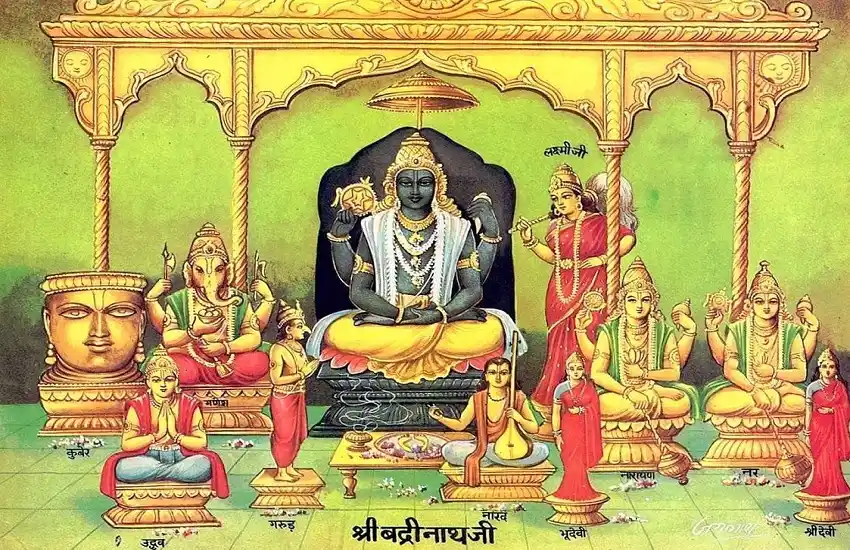
The presiding deity is Lord Vishnu, worshipped as Badrinarayan or Badri Vishal. The idol is small, about one foot tall, carved from black Shaligram stone. Vishnu sits in padmasana, a meditative posture, with two arms raised holding the conch and discus and two resting in his lap. It sits under a gold canopy.
That meditative pose is the key to the whole place. Badrinath is where Vishnu is believed to have performed penance, not where he fought or ruled. Pilgrims who expect a towering idol are often surprised by how small the deity is. Most say it’s more moving because of it.
Other deities in the complex include Lakshmi, Nar and Narayan, Kubera, Garuda and Uddhava.
Badrinath temple god name
The deity’s name is Badrinarayan. “Badri” comes from the badri tree (Indian jujube), and “Narayan” is a name of Vishnu. You’ll also hear Badri Vishal and Badrinath, which means “Lord of Badri”.
Badrinath temple is in which state?
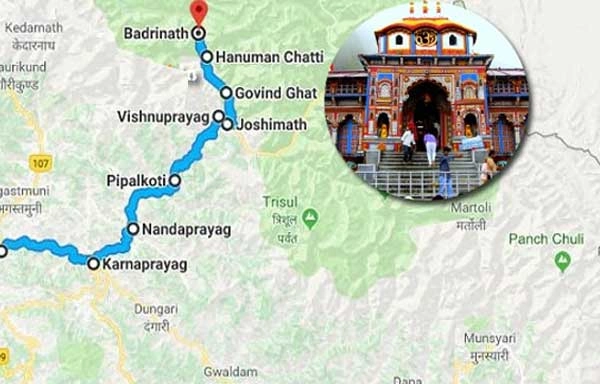
Badrinath temple is in Uttarakhand, in the Chamoli district of the Garhwal Himalaya. It’s close to the India-Tibet border. Mana, often called the last Indian village before the border, is only about 3 to 4 km beyond the temple.
The town sits about 300 km by road from Rishikesh and around 525 km from Delhi. For routes, distances and halts, see our guide on how to reach Badrinath.
Badrinath dham kahan hai?
Badrinath Dham Uttarakhand ke Chamoli zile mein hai, Alaknanda nadi ke kinare, Nar aur Narayan parvat ke beech. Yeh Rishikesh se lagbhag 300 km aur Delhi se lagbhag 525 km door hai.
Which river flows in Badrinath?
The Alaknanda river flows past Badrinath temple. It rises from the Satopanth and Bhagirath Kharak glaciers above Mana and runs south. At Devprayag, about 70 km from Rishikesh, it meets the Bhagirathi, and from there the combined river is called the Ganga.
Just above Badrinath, near Mana, the Saraswati river joins the Alaknanda at Keshav Prayag. Pilgrims cross the Saraswati at Bhim Pul, a natural stone bridge.
Below the temple, on the riverbank, you’ll find Tapt Kund, a natural hot spring at around 55°C where most pilgrims bathe before darshan. It sits a few metres from the icy Alaknanda, and that contrast surprises almost everyone. Our Tapt Kund and Brahma Kapal walk covers the riverside rituals.
How high is Badrinath temple?
This question has two meanings, so here are both answers:
- Altitude: Badrinath town and temple sit at about 3,133 m (10,279 ft) above sea level. That’s high enough for some visitors to feel breathless on stairs, especially on the first day.
- Building height: The temple’s conical sanctum roof rises about 15 m (49 ft), topped with a gilded cupola.
For comparison, Kedarnath temple stands at about 3,583 m, roughly 450 m higher than Badrinath.
About Badrinath temple: history in brief
This question has two meanings, so here are both answers:
- Altitude: Badrinath town and temple sit at about 3,133 m (10,279 ft) above sea level. That’s high enough for some visitors to feel breathless on stairs, especially on the first day.
- Building height: The temple’s conical sanctum roof rises about 15 m (49 ft), topped with a gilded cupola.
For comparison, Kedarnath temple stands at about 3,583 m, roughly 450 m higher than Badrinath.
How high is Badrinath temple?
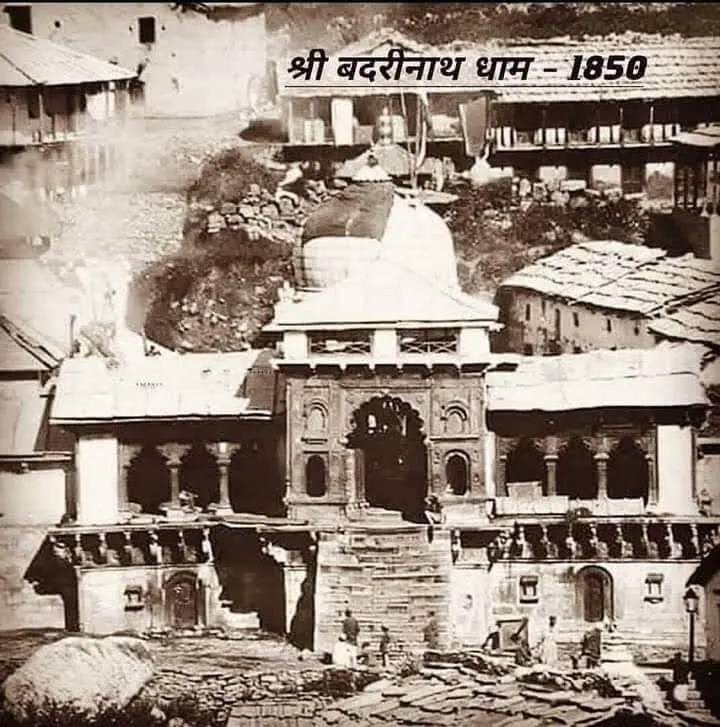
The site is ancient. The temple you see today is much more recent.
- Legend: Vishnu meditated here, and Lakshmi took the form of a badri tree to shelter him from snow and sun. The Vishnu Purana also names the place as the hermitage of the sages Nar and Narayan.
- Adi Shankaracharya is credited with re-establishing Badrinath as a pilgrimage centre in the 9th century, recovering the idol from the Narad Kund and enshrining it again.
- 16th century: a king of Garhwal moved the idol to the present temple.
- After 1803: the temple was largely rebuilt following a major Garhwal earthquake.
The colourful stone facade, painted in bright reds, greens and golds, looks almost Buddhist to many visitors. Scholars have long noted this, and the style is part of what makes Badrinath instantly recognisable in photos.
The mountains around the temple
Look around from the temple steps and you’ll see why the setting matters. Nar Parbat rises directly across the river, and Narayan Parbat stands behind the temple, the two ranges named after the sages who meditated here. Above and behind them, on clear mornings, Neelkanth peak (6,596 m) shows its snow-covered pyramid. The best time to see it is the first hour after sunrise.
Inside the temple: the three parts
The temple has three sections, and knowing them helps you follow the queue:
- Sabha Mandap, the outer hall where pilgrims gather and where priests conduct many of the pujas booked by devotees.
- Darshan Mandap, where you stand for darshan and where the main rituals are performed.
- Garbhagriha, the sanctum, where Badrinarayan sits under the gold canopy with the other deities around him.
The queue moves from the main gate on the river side, up the steps and through the Sabha Mandap. In peak weeks the line can stretch down towards the bridge, so arrive early. Most pilgrims get only a few seconds in front of the deity, which is why many attend both the morning and evening aarti.
Who are the priests at Badrinath?
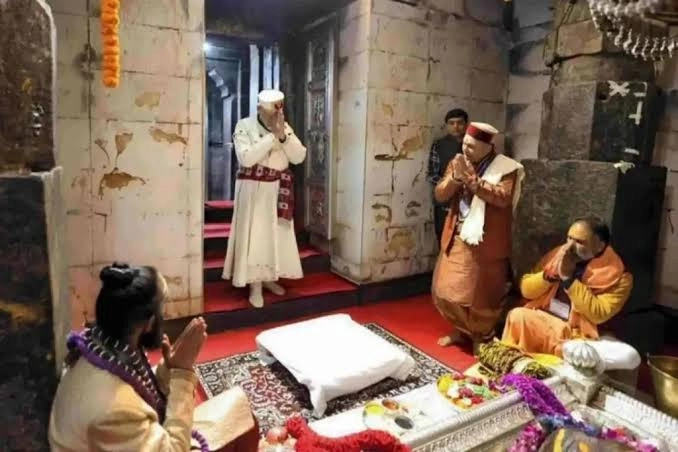
The head priest, called the Rawal, is traditionally a Namboodiri Brahmin from Kerala, more than 3,000 km away. This tradition links back to Adi Shankaracharya, who was himself from Kerala. The temple is administered by the Shri Badrinath-Kedarnath Temple Committee (BKTC), which also runs online puja and darshan bookings.
Why is Badrinath closed for six months?
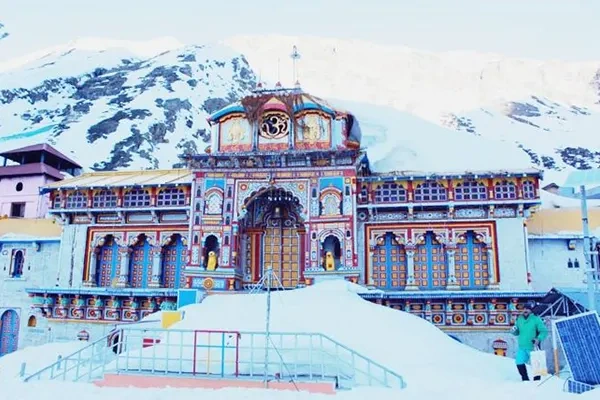
Heavy snow buries the town from November to April, so the temple closes in winter. Before closing, an akhand jyoti (ghee lamp) is lit, and it’s believed to keep burning until the doors reopen. During winter, worship continues at the Narsingh temple in Joshimath.
The closing date is announced on Vijayadashami (Dussehra) each year, and the opening date on Basant Panchami. The temple usually reopens around late April or early May. Read our kapat closing guide for the closing ceremony.
What is Badrinath famous for?
Badrinath is famous for being:
- One of the Char Dham of Hinduism, with Rameswaram, Dwarka and Puri, the four abodes linked to Adi Shankaracharya.
- One of the Chota Char Dham in Uttarakhand, with Kedarnath, Gangotri and Yamunotri.
- One of the 108 Divya Desams, the holy Vishnu shrines praised by the Tamil Alvar saints.
- The first of the Panch Badri, five Vishnu shrines in the region: Badrinath (Vishal Badri), Yogdhyan Badri at Pandukeshwar, Bhavishya Badri, Vridha Badri and Adi Badri.
- Pind daan at Brahma Kapal, a riverside platform where Hindus perform rites for ancestors.
Practical facts for visiting
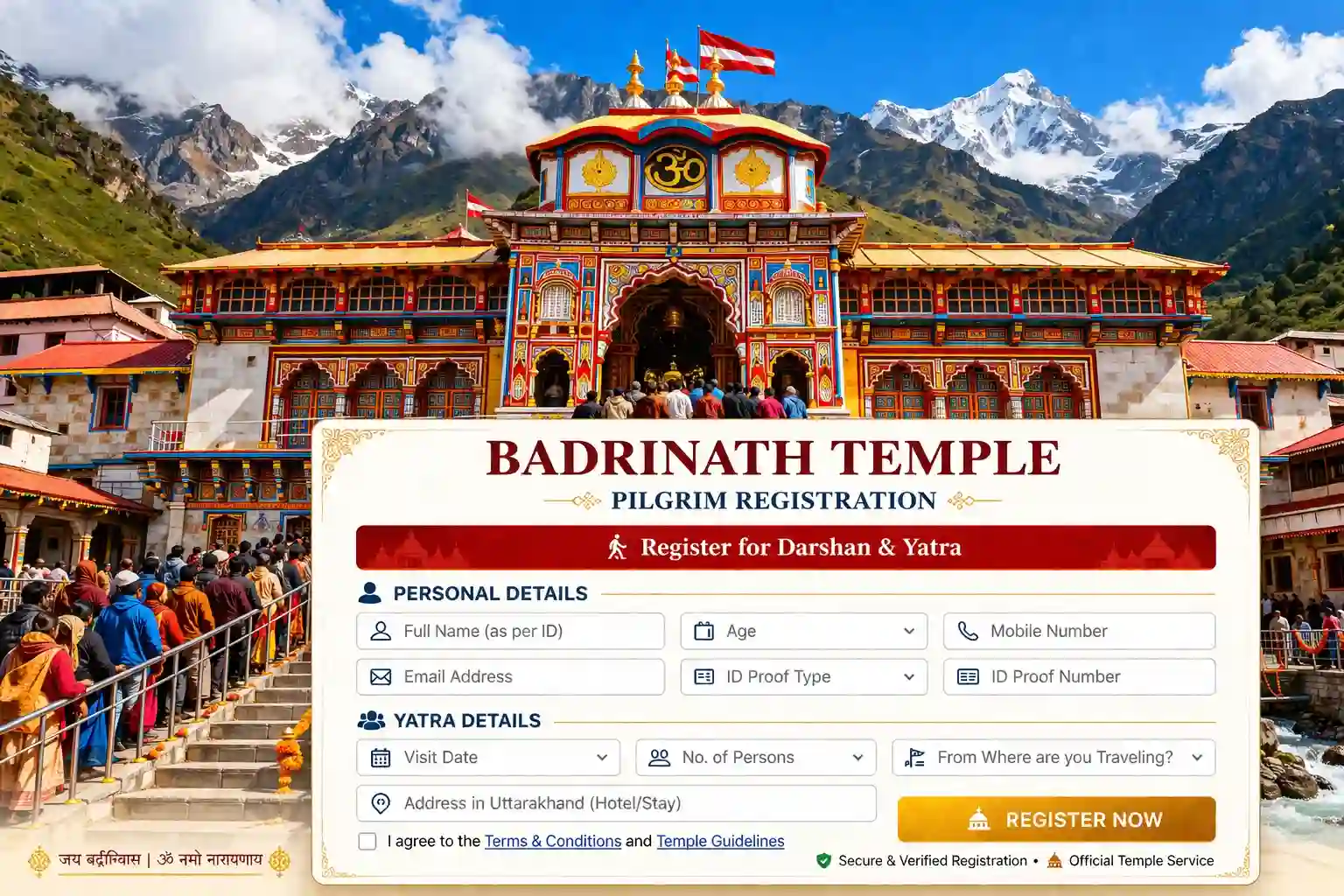
- Darshan timings change through the season. Early morning and evening aarti are the busiest. See our darshan timings page.
- Registration: Char Dham Yatra registration is compulsory.
- Photography is not allowed inside the temple.
- Dress: Modest, warm clothing. Shoes are removed before the temple steps.
- Nearby: Mana village, Bhim Pul, Vyas Gufa, Charan Paduka and Mata Murti temple. See things to do in Badrinath and our Mana village day trip.
Frequently Asked Questions
Lord Vishnu is worshipped in Badrinath temple in the form of Badrinarayan. The one-foot black Shaligram idol shows Vishnu seated in meditation, holding a conch and discus. Lakshmi, Nar-Narayan, Kubera, Garuda and Uddhava are also worshipped in the temple complex.
Badrinath temple is in Uttarakhand, India, in the Chamoli district of the Garhwal Himalaya. It sits on the Alaknanda river between the Nar and Narayan mountain ranges, close to the India-Tibet border and about 3 to 4 km from Mana village.
The Alaknanda river flows beside Badrinath temple. It rises from glaciers above Mana and later joins the Bhagirathi at Devprayag to form the Ganga. The Tapt Kund hot spring sits on the riverbank just below the temple, where pilgrims bathe before darshan.
Badrinath temple stands at an altitude of about 3,133 metres (10,279 feet) above sea level. The temple building itself has a conical sanctum roof roughly 15 metres (49 feet) tall, topped with a gilded cupola and colourful painted facade.
Adi Shankaracharya re-established Badrinath as a pilgrimage centre in the 9th century and re-enshrined the idol. The idol was moved to the present temple by a Garhwal king in the 16th century, and the temple was largely rebuilt after the 1803 earthquake.
The deity at Badrinath is called Badrinarayan, a form of Lord Vishnu. He’s also known as Badri Vishal and Badrinath, meaning Lord of Badri. The name comes from the badri (jujube) tree that, according to legend, Lakshmi became to shelter Vishnu.
Badrinath is closed for about six months, from November to April, because heavy snow covers the town. Before closing, an akhand jyoti lamp is lit. Winter worship of Badrinarayan continues at the Narsingh temple in Joshimath until the temple reopens around late April or May.
The head priest of Badrinath is called the Rawal. By tradition, the Rawal is a Namboodiri Brahmin from Kerala, a link to Adi Shankaracharya, who came from Kerala. The temple is managed by the Shri Badrinath-Kedarnath Temple Committee.
Yes. Badrinath is one of the four Char Dham of Hinduism, with Rameswaram, Dwarka and Puri. It’s also part of the Chota Char Dham of Uttarakhand, with Kedarnath, Gangotri and Yamunotri, and one of the 108 Divya Desams dedicated to Vishnu.
No. Photography and videography aren’t allowed inside Badrinath temple. You can take photos of the temple facade from outside, from the riverbank and from the bridge. Follow the signs and police instructions in the temple area, which change during busy periods.
All Categories
Recent Post
-
13 Oct 2026 UncategorizedBadrinath Temple Facts : Which God, Which State, Height, River
-
 30 Sep 2026 Badrinath Travel GuideBadrinath Hotel WiFi and Mobile Network: What NRIs Should Know Before They Go
 -
 30 Sep 2026 Badrinath HotelsBadrinath Hotel With Mountain View: A Photographer's Guide to Rooms, Light and Timing
 -
 30 Sep 2026 Badrinath HotelsHow to Book Badrinath Hotel From Abroad: Cards, UPI and Payment Tips
 -
 30 Sep 2026 Badrinath HotelsBest Hotels Near Badrinath Temple Compared: Distance, Comfort and Who Each Suits
Stay close to Badri Vishal
Hotel Royal Badri is about 900 m from the temple on the main road near the bus stand, with Sattvik meals at our Akshaya restaurant and staff who know the aarti and darshan timings. Stay at Hotel Royal Badri or WhatsApp +91 87960 35148 to plan your darshan.