

Diwali and Bhai Dooj at Badrinath: Witnessing the Sacred Kapat Closing Ceremony

Diwali, on 8 November 2026, and Bhai Dooj two to three days later, form the final stretch of Badrinath’s pilgrimage season. For pilgrims able to make the journey during this narrow window in Diwali and Bhai Dooj at Badrinath, it offers something rare: the festival of lights celebrated in one of Hinduism’s holiest shrines, followed almost immediately by the emotional closing ceremony.
Diwali in the Mountains
Diwali in Badrinath is understated compared to cities — oil lamps around the temple courtyard, quiet prayers, and the growing anticipation of the kapat closing just days away. It’s a meaningful, less crowded alternative to a typical Diwali at home.
What Makes This Window Unique
Very few pilgrims get to experience Diwali away from home inside one of the four sacred Char Dham shrines, and fewer still time it to overlap with the temple’s own closing rituals. The combination — festival of lights, sibling celebration, and sacred closing ceremony within the same week — is a once-a-year alignment worth planning around carefully.
Because November nights at this altitude drop well below freezing, evening events around Diwali and the closing ceremony require serious cold-weather preparation: thermal layers, a proper down jacket, gloves, and closed insulated footwear are not optional at this time of year.
Given the short window and high demand, this is one trip where booking flexibility matters more than usual — confirm your exact travel dates only once the Dussehra announcement on 20 October locks in the closing schedule.
The Sacred Significance of Badrinath
Badrinath Temple is one of the four sacred Char Dham shrines of Hinduism and one of the 108 Divya Desams revered by Vaishnavites, dedicated to Lord Vishnu in his Badrinarayan form. Set on the banks of the Alaknanda River at roughly 3,133 metres in the Garhwal Himalayas, it draws pilgrims from across India and the diaspora who undertake the journey as one of the most significant spiritual acts of their lives.
Unlike temples that remain open year-round, Badrinath’s six-month window — opening in late April around Akshaya Tritiya and closing around Bhai Dooj in November — gives every visit here a built-in sense of occasion. The temple’s architecture, with its distinctive conical roof and brightly painted facade, has stood through centuries of pilgrimage, rebuilding, and renewal, making even a brief darshan feel connected to a much longer tradition.
Temple Timings & the Darshan Process
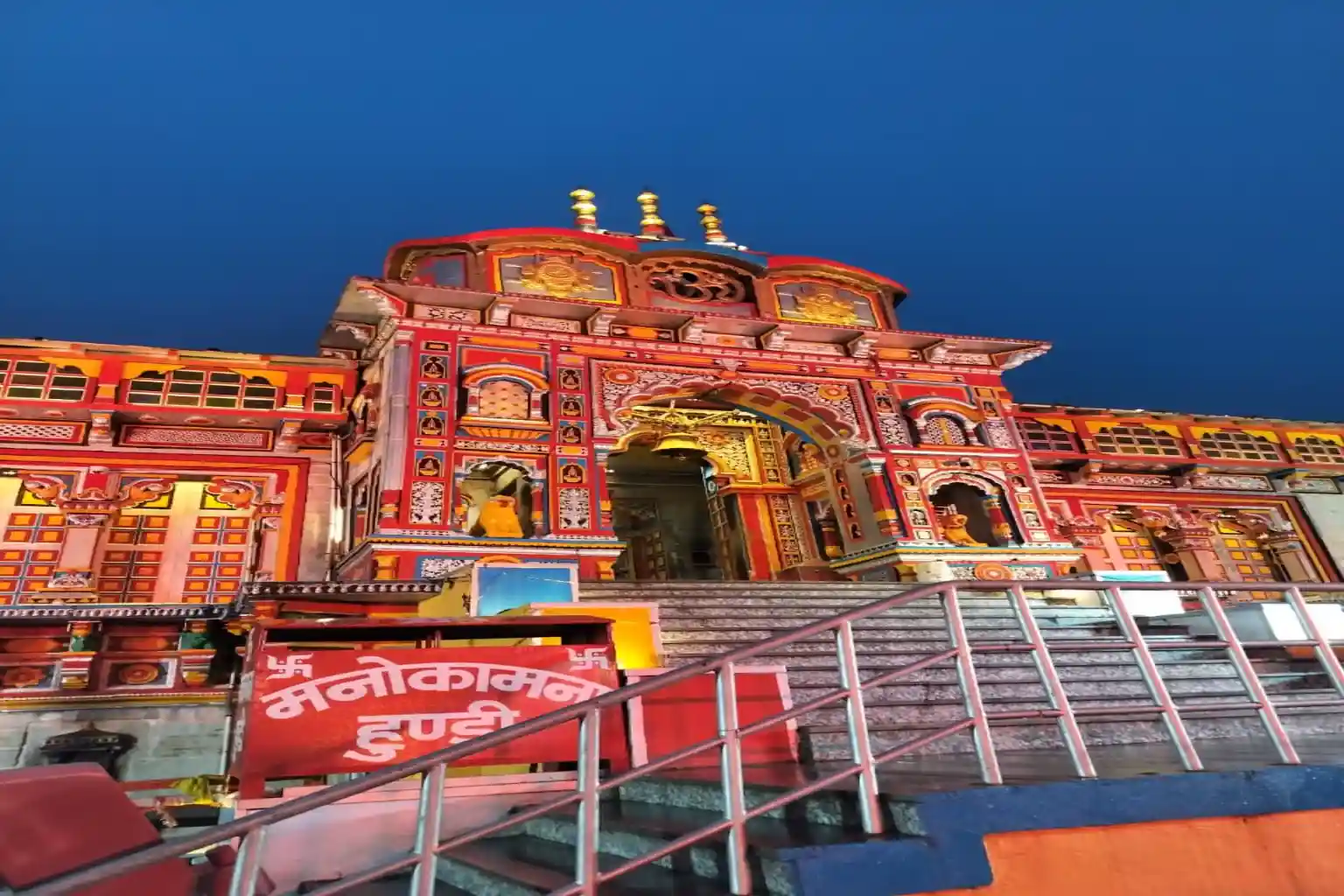
Badrinath Temple typically opens at 7:00 AM and closes for the day at 9:00 PM, with a midday break between 12:00 PM and 4:00 PM when the sanctum is closed for rituals. Most pilgrims aim for either the early morning slot, right after opening, or the late afternoon slot after 4:00 PM, both of which tend to see shorter queues than the late morning rush.
On arrival, pilgrims typically join the general darshan queue, though priority and VIP darshan options exist for those who prefer a shorter wait — useful for elderly travellers or families with young children. Footwear is left outside the temple premises, and modest, weather-appropriate clothing is expected given the temple’s religious significance and the region’s cold climate.
Local Etiquette & Cultural Tips for Pilgrims
Dress modestly when visiting the temple — shoulders and knees covered is the general standard, and this also happens to be practical given the cold climate. Footwear is removed before entering the sanctum, so slip-on shoes or sandals that are easy to remove and re-wear make the process smoother, especially in queues.
Photography inside the inner sanctum is typically restricted; check current signage or ask temple staff before taking pictures near the deity. Speaking softly and maintaining a respectful pace through the queue, particularly during peak hours, is appreciated by fellow pilgrims and temple staff alike, many of whom have walked long distances themselves to be there.
Quick Facts
- Diwali 2026: 8 November
- Kapat closing expected: ~11–13 November 2026 (Bhai Dooj)
- November nights at Badrinath regularly drop below freezing
- Confirm travel dates only after the Dussehra announcement (20 Oct)
Practical Yatra Preparation Checklist
Whatever the specific purpose of your visit, a few preparation steps apply to almost every Badrinath trip:
- Complete mandatory Char Dham Yatra registration before departure
- Pack layered clothing — mornings and evenings are cold even in peak season
- Carry a valid government photo ID for checkpoints and hotel check-in
- Keep printed copies of key documents in case of network issues
- Allow a rest period on arrival to adjust to the altitude
- Confirm road conditions before each leg of a monsoon or late-season trip
Why Hotel Royal Badri Is the Right Base for This

Hotel Royal Badri – A Pilgrim’s Habitat is positioned just 900 metres from the revered Badrinath Temple, designed to bridge ancient tradition with modern comfort. The property offers 41 restorative rooms, pure Sattvic dining at Akshaya Restaurant, an open-air Ambar Sky Cafe overlooking the mountains, and a dedicated Anugraha Concierge to handle every pilgrim need — from ritual bookings to local logistics.
Sattvic Dining at Akshaya Restaurant
Food in Badrinath follows Sattvic principles — pure vegetarian, prepared without onion or garlic in most temple-town kitchens, in keeping with the region’s spiritual character. At Hotel Royal Badri, Akshaya Restaurant serves wholesome Sattvic meals throughout the day, giving pilgrims a comforting, familiar option after a long journey or a demanding day of darshan and rituals. For a more relaxed setting with mountain views, the open-air Ambar Sky Cafe offers a quieter spot to unwind in the evenings.
Anugraha Concierge: Personalised Pilgrim Support
Every pilgrimage comes with logistics — arranging priests, timing rituals around temple hours, coordinating local transport, or simply understanding what to expect on any given day. Hotel Royal Badri‘s Anugraha Concierge is built specifically around these needs, offering guests a single point of contact for planning their stay around darshan timings, ritual bookings, and nearby sightseeing, so the practical side of the journey never overshadows its spiritual purpose.
Places to Visit in Badrinath From Hotel Royal Badri
Staying close to the temple means most of Badrinath‘s sacred sites are within easy walking or short driving distance:
Place | Distance from Hotel Royal Badri |
~900 metres (walking distance) | |
Tapt Kund | ~800 metres |
~750 metres | |
Bheem Pul | ~4.5 km |
~3 km | |
Vasudhara Falls | ~8.5 km |
Vyas Gufa | ~4.3 km |
Swargarohini | ~24 km |
Satopanth | ~20 km |
Yogdhan Badri | ~10 km |
How to Reach Badrinath
Badrinath is well connected by road from the major gateway cities of Uttarakhand and North India:
City | Distance from Badrinath |
Rishikesh | ~298 km |
Haridwar | ~318 km |
Dehradun | ~340 km |
Delhi | ~510 km |
Most pilgrims travel via Rishikesh or Haridwar by road, with the final stretch winding through Joshimath. Shared taxis, private cabs, and Uttarakhand Roadways buses all operate this route during the yatra season.
Frequently Asked Questions (FAQs)
It’s cold but manageable with proper layering; heated rooms at Hotel Royal Badri make evenings comfortable.
Availability is very limited this week — call 87960 35148 as early as possible to check.
Hotel Royal Badri is approximately 900 metres from Badrinath Temple, within comfortable walking distance for most pilgrims.
You can call 87960 35148 directly for bookings, reservations, or urgent queries.
Yes — you can complete your booking on mobile through our secure booking link, or WhatsApp/call 87960 35148 for assisted booking.
Coverage is patchy near the temple and beyond Joshimath — save key numbers and confirmations offline before you travel.
Unit no. 6, Tribhuwan Complex, Ishwar Nagar, Friends Colony, Delhi – 110065.
Weather Across the Badrinath Season
Badrinath’s roughly six-month open season spans a wide weather range: late April and May can still see occasional snow and sharp cold, June through August brings monsoon rain alongside milder daytime temperatures, September offers a pleasant post-monsoon window, and October through mid-November turns progressively colder as the season winds down. Regardless of when you travel, evenings and early mornings are cold enough to need proper layering, and conditions can shift within the same day given the altitude.
All Ccategories
Recent Post
-
 11 Sep 2026 UncategorizedBadrinath With Children: What Parents Should Plan Differently
 -
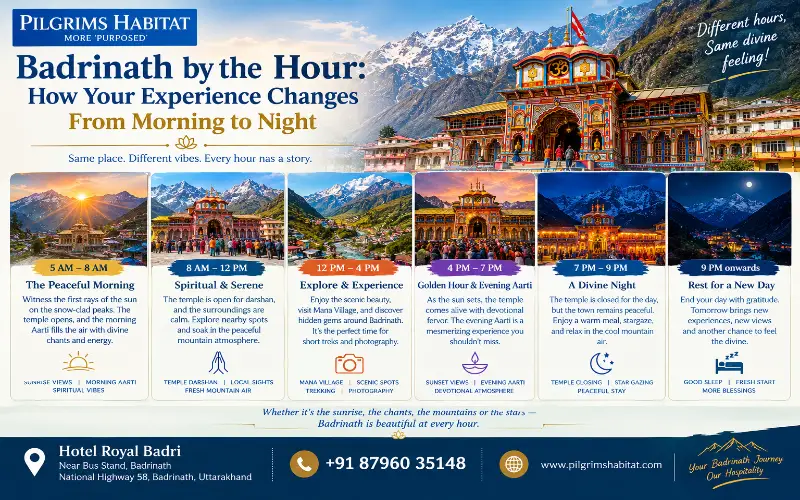
08 Sep 2026 UncategorizedBadrinath by the Hour: How Your Experience Changes From Morning to Night
-
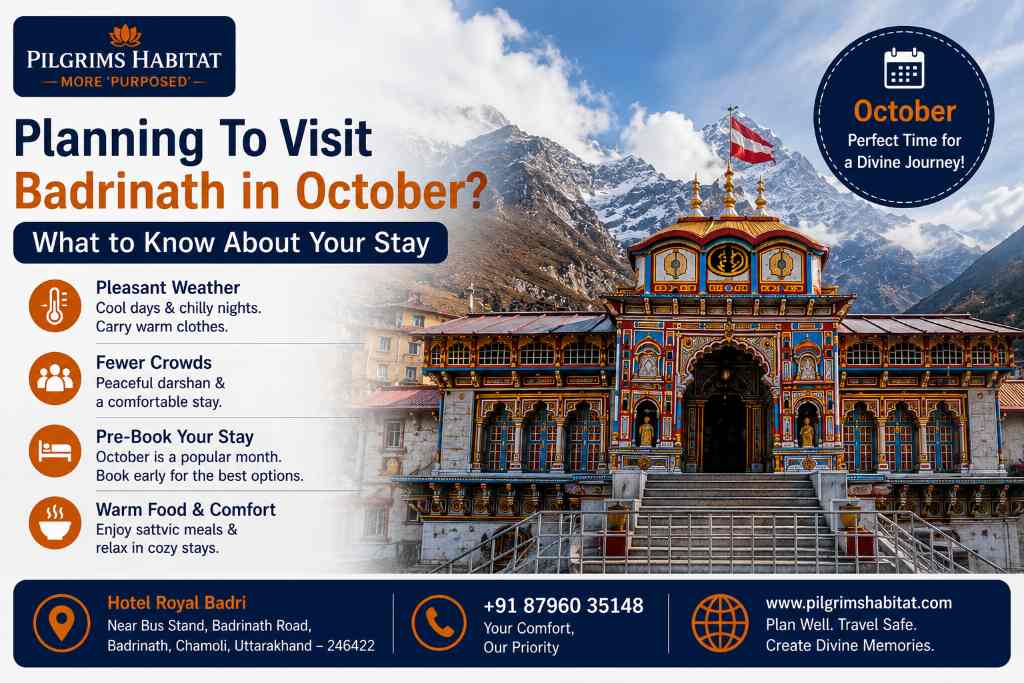 05 Sep 2026 UncategorizedPlanning To Visit Badrinath in October? What to Know About Your Stay
 -
 03 Sep 2026 UncategorizedPacking Tips for Badrinath: What to Carry and How to Stay Comfortable
 -
 01 Sep 2026 UncategorizedBadrinath vs Joshimath: Where Should You Stay During Your Char Dham Trip?