

Mana Village Day Trip: Complete Planning Guide from Hotel Royal Badri (2026)
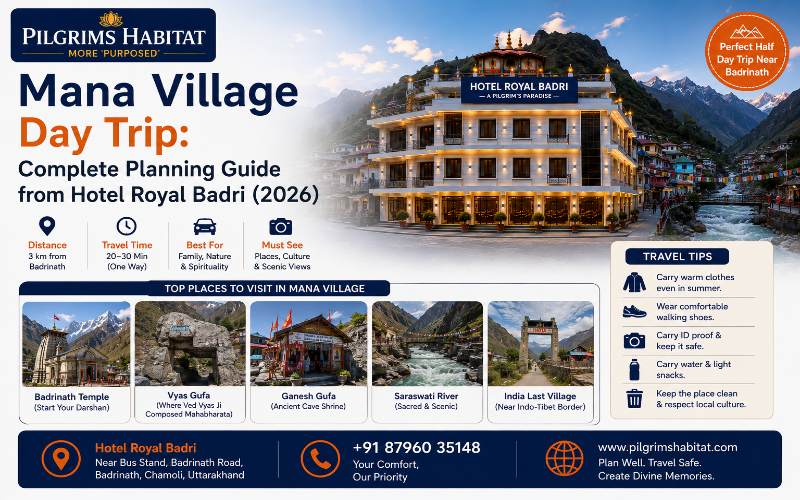
Mana Village — India’s last inhabited village before the Tibetan border — sits just 3 kilometres from Hotel Royal Badri, making it one of the most accessible and rewarding day trips from Badrinath. The drive takes 15–20 minutes, the village rewards 3–4 hours of unhurried exploration, and you return to the hotel in time for evening darshan at the temple. This complete guide covers every practical detail: how to get there, what to see, how long each site takes, where to eat, what to buy, cave visit timing, cultural etiquette, road conditions, and how to arrange a seamless return trip.
Mana Village Day Trip: Quick Reference
Detail | Information |
Distance from Hotel Royal Badri | ~3 km (15–20 minutes by road) |
Best departure time | 9:00–9:30 AM — after breakfast at Akshaya Restaurant and morning darshan |
Recommended time at Mana | 3–4 hours covers all key sites comfortably |
Return time | 2:00–2:30 PM — back at hotel before the 4:00 PM temple reopening |
Transport cost (shared taxi) | ₹100–₹200 per person one way |
Transport cost (private cab) | ₹400–₹700 per vehicle one way; ₹700–₹1,200 round trip with waiting |
Bikes / scooters from hotel | Not available — road to Mana is a mountain route requiring appropriate vehicles |
Nearest eatery in Mana | Local dhabas serving basic Sattvic meals near Vyas Gufa |
What Are the Essential Sights to See in Mana Village — India's Last Village?
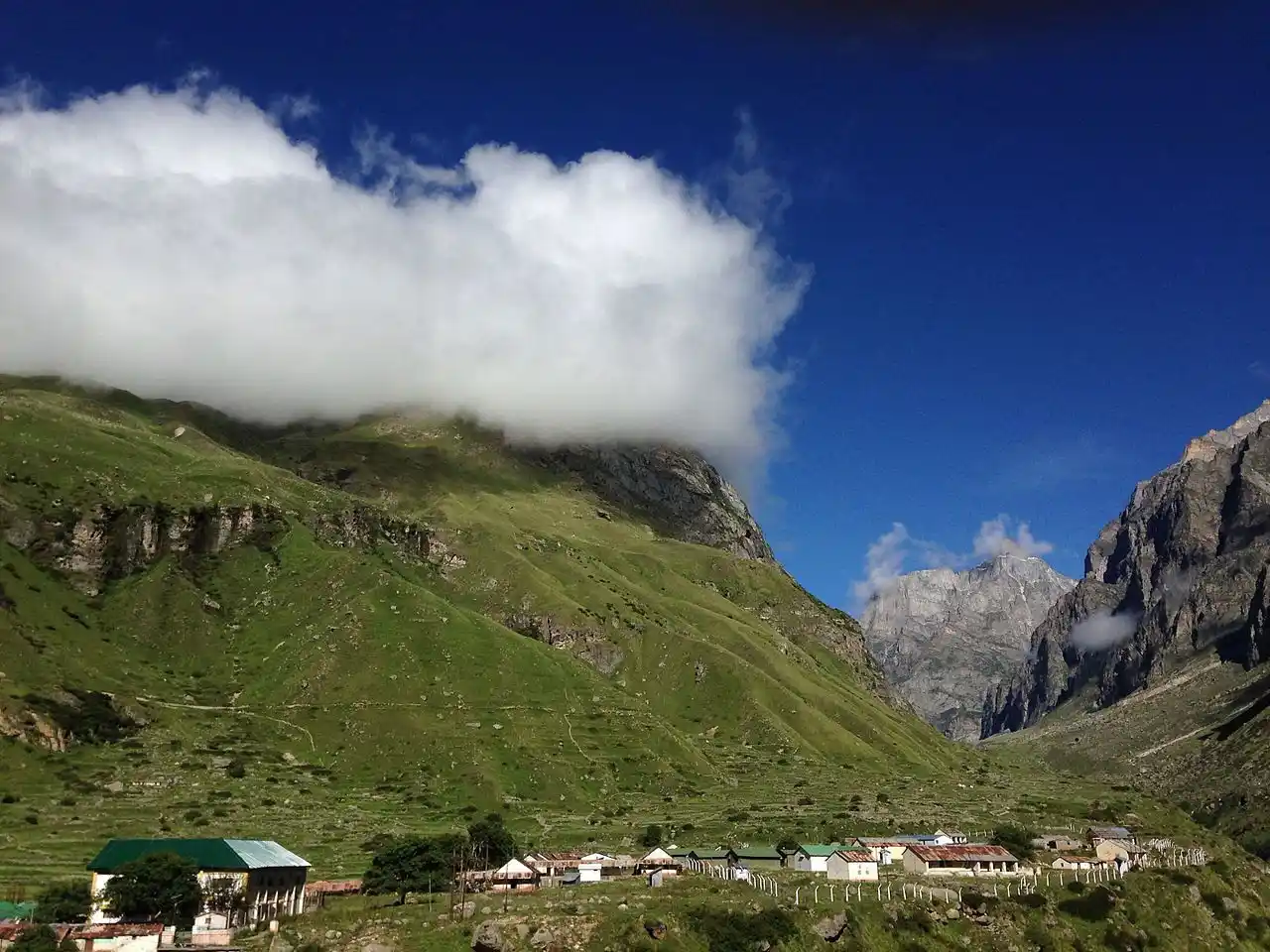
Mana Village sits at approximately 3,200 metres above sea level in the Chamoli district of Uttarakhand, 3 km beyond Badrinath on the road to the Mana Pass. It holds the distinction of being the last permanently inhabited settlement on the Indian side of the Tibet border. In 2021, the government officially designated it as India’s First Village (gaon) rather than last — a reframing from border geography to national identity. The village has a population of around 500–600 Bhotia community members during the summer season.
Vyas Gufa (Vyasa's Cave)
Vyas Gufa is the cave where, according to Hindu tradition, the sage Vedavyasa composed the Mahabharata and the Puranas. The cave sits within the village and is accessible by a short walk from the main Mana settlement. A small temple inside the cave contains an idol of Ganesha, who served as Vyasa’s scribe during the composition. The cave is approximately 4.3 kilometres from Hotel Royal Badri.
Best time to visit Vyas Gufa: the cave is open from 7:00 AM onwards. Visit before 11:00 AM when the cave is coolest and least crowded. The cave itself takes 15–20 minutes to explore including the brief puja option inside.
Ganapati / Ganesh Gufa
Ganesh Gufa, adjacent to Vyas Gufa, is where Ganesha is said to have sat and transcribed the Mahabharata as Vyasa dictated it. A small idol of Ganesha marks the spot. Many pilgrims visit both caves consecutively as a single sacred site — allow 20–30 minutes for both. Maintain respectful silence inside the caves.
Saraswati River Emergence Point
One of Mana Village’s most mythologically significant features is the visible emergence of the Saraswati river from beneath a rock, shortly before it joins the Alaknanda at Keshav Prayag. The Saraswati is one of the three rivers of the Triveni Sangam mythology (Ganga, Yamuna, Saraswati) — and Mana is one of the few places where its physical presence can be witnessed before it disappears underground. The emergence point is a short walk from the main village.
Bheem Pul (Bhima's Bridge)
Bheem Pul is a naturally formed rock bridge over the Saraswati river, believed to have been placed there by Bhima — one of the Pandava brothers — as a crossing for Draupadi during the Mahabharata-era journey to heaven (Swargarohini). The bridge is approximately 4.5 km from Hotel Royal Badri and sits just outside the main Mana settlement at the river. The geological formation — a massive boulder spanning the gorge — is genuinely impressive regardless of its mythological significance. Allow 20 minutes for the walk to and from the bridge.
Keshav Prayag — The Saraswati-Alaknanda Confluence
Just below Mana Village, the invisible Saraswati river is believed to join the Alaknanda at the confluence known as Keshav Prayag. Unlike the more famous Panch Prayags downstream, Keshav Prayag is not marked by elaborate infrastructure — its significance lies in its scriptural association with the Saraswati’s subterranean journey. Many pilgrims offer tarpan here for departed ancestors.
Mana Village Architecture and Bhotia Culture
Walk through the village itself — the traditional stone houses, narrow lanes, and wooden doorways of the Bhotia community are a distinctive architectural and cultural experience unlike any other site on the Badrinath circuit. The Bhotia people are traditionally traders who once operated the Mana Pass trade route to Tibet. Their weaving traditions produce the woollen items for which Mana is locally known. Plan 30–45 minutes for a slow walk through the village lanes.
How Long Does It Take to Reach Mana Village from Hotel Royal Badri?
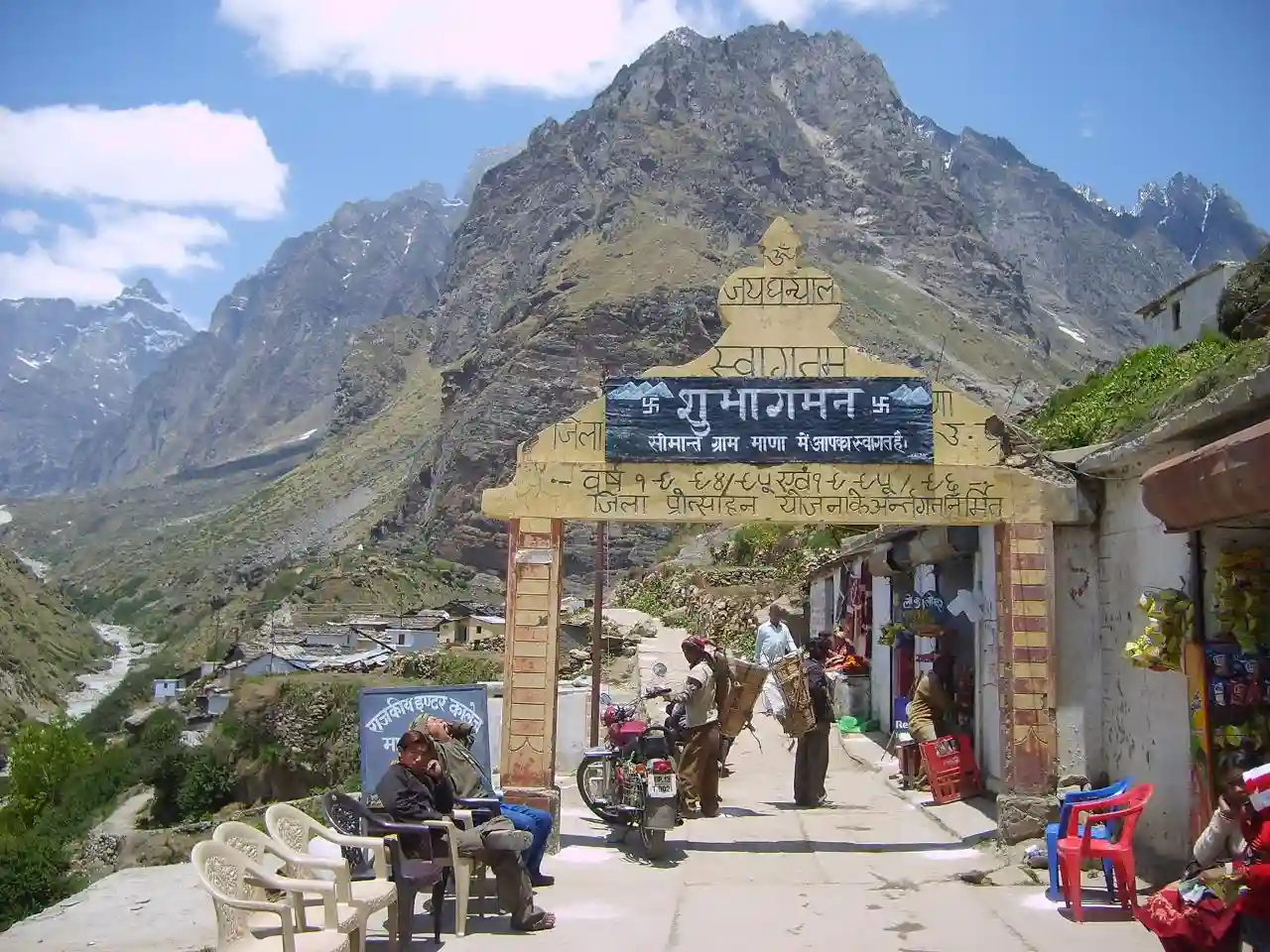
The drive from Hotel Royal Badri to Mana Village takes 15–20 minutes in normal conditions. The road distance is approximately 3 km along the Mana highway that continues from Badrinath. It is a paved mountain road — narrower than the main Badrinath highway — without hairpin bends or difficult sections. In peak season (June) or during the Navratri and pre-closing rush (October), the road sees higher traffic and the drive may take 25–30 minutes.
What Are the Best Transportation Options for a Day Trip to Mana Village from Hotel Royal Badri?
Option 1: Shared Taxi (₹100–₹200 per person)
Shared taxis between Badrinath and Mana Village operate throughout the pilgrimage season from a stand near the Badrinath bus stand and parking area, approximately 1 km from Hotel Royal Badri. They depart when full (typically 5–6 passengers) and take 15–20 minutes. For solo pilgrims or small groups of 2 who are flexible on timing, this is the most affordable option. The same shared taxis return from Mana — ask the driver which stop the return taxis use.
Option 2: Private Cab (₹700–₹1,200 round trip with waiting)
A private cab with driver waiting time during your Mana visit gives you the most flexibility — depart when you’re ready, spend as long as you want, and return without waiting for a shared taxi. Round trip including 3–4 hours of waiting time at Mana costs approximately ₹700–₹1,200 depending on vehicle type and season. Hotel Royal Badri’s Anugraha Concierge maintains a vetted driver network — ask for a cab recommendation when booking your room or the evening before your planned Mana visit.
Option 3: Walking (Not Recommended for Most Pilgrims)
The 3 km road walk from Badrinath to Mana is technically possible but not recommended for most pilgrims — particularly those who have already done morning darshan and the Tapt Kund circuit. The road gains altitude and the return walk is all uphill. For physically fit younger pilgrims on a budget and without elderly family members, the walk takes approximately 45–60 minutes each way.
Is It Possible to Rent Bikes or Scooters from Hotel Royal Badri for a Mana Village Day Trip?
No — bike and scooter rental is not available from Hotel Royal Badri, and it is not advisable for the Mana road given its mountain terrain and traffic mix of pilgrims, local vehicles, and BRO maintenance trucks. Two-wheelers on this road are genuinely risky for riders unfamiliar with mountain driving conditions. A shared or private cab is the appropriate transport for this route.
How Do You Book a Guided Day Trip to Mana Village Near Hotel Royal Badri?
Book your Mana Village guided day trip through Hotel Royal Badri’s Anugraha Concierge — call 87960 35148 or ask at the front desk the evening before your planned visit. The concierge arranges: a vetted local guide registered with Uttarakhand Tourism, a reliable driver, and a departure time that coordinates with your morning darshan schedule. Local guides typically charge ₹800–₹1,500 for a half-day Mana circuit covering Vyas Gufa, Bheem Pul, and the village walk.
Are There Local Tour Operators Offering Guided Excursions to Mana?
Informal local guide services operate near the Badrinath parking area and at Mana Village entrance — but quality varies significantly. Guides referred by Hotel Royal Badri’s Anugraha Concierge are Uttarakhand Tourism registered and have been vetted through multiple seasons. Approach direct solicitations near the bus stand with caution — ask for a Tourism Department registration card before hiring on arrival.
What Are the Popular Time Slots for Visiting Mana Village on a Day Trip?
The ideal departure window from Hotel Royal Badri for a Mana day trip is 9:00–9:30 AM. This timing works because:
- It follows breakfast at Akshaya Restaurant (typically 7:30–8:30 AM) and any morning darshan at the temple
- The caves at Mana (Vyas Gufa, Ganesh Gufa) are coolest and least crowded in the morning hours between 9:00 AM and 11:00 AM
- A 9:30 AM departure allows a 4-hour Mana visit and a 2:00 PM return — comfortably before the temple’s 4:00 PM afternoon reopening for another darshan session
- The Bheem Pul viewpoint and Saraswati emergence point are clearest in morning light
Departure Time | Return Time | Experience | Recommendation |
7:00 AM (very early) | 11:00 AM | Quiet; cold; caves dark without crowds | Good for serious photographers or those wanting complete silence |
9:00–9:30 AM (recommended) | 1:30–2:30 PM | Best light, manageable crowds, warm enough for comfortable walk | Best for most pilgrims and families |
11:00 AM – 12:00 PM | 3:00–4:00 PM | Busiest period; hot in June, pleasant in October | Acceptable; risk of rushing to make afternoon darshan |
2:00 PM onwards | 5:00–6:00 PM | Quieter again; some cave shrines begin closing | Only if morning was fully committed to Badrinath darshan |
What Are the Best Times to Visit the Cave Attractions in Mana?
Visit Vyas Gufa and Ganesh Gufa before 11:00 AM for the quietest, most contemplative experience. Both caves are open from 7:00 AM. Between 10:00 AM and 1:00 PM, pilgrim groups arrive in higher numbers and the narrow cave interiors become crowded. The cave pujari (priest) conducts brief aartis in the morning — arriving before 9:30 AM gives you access to this ceremony. After 2:00 PM, the caves quieten again as day-trippers begin returning to Badrinath.
What Are the Road Conditions for a Day Trip from Badrinath to Mana Village?
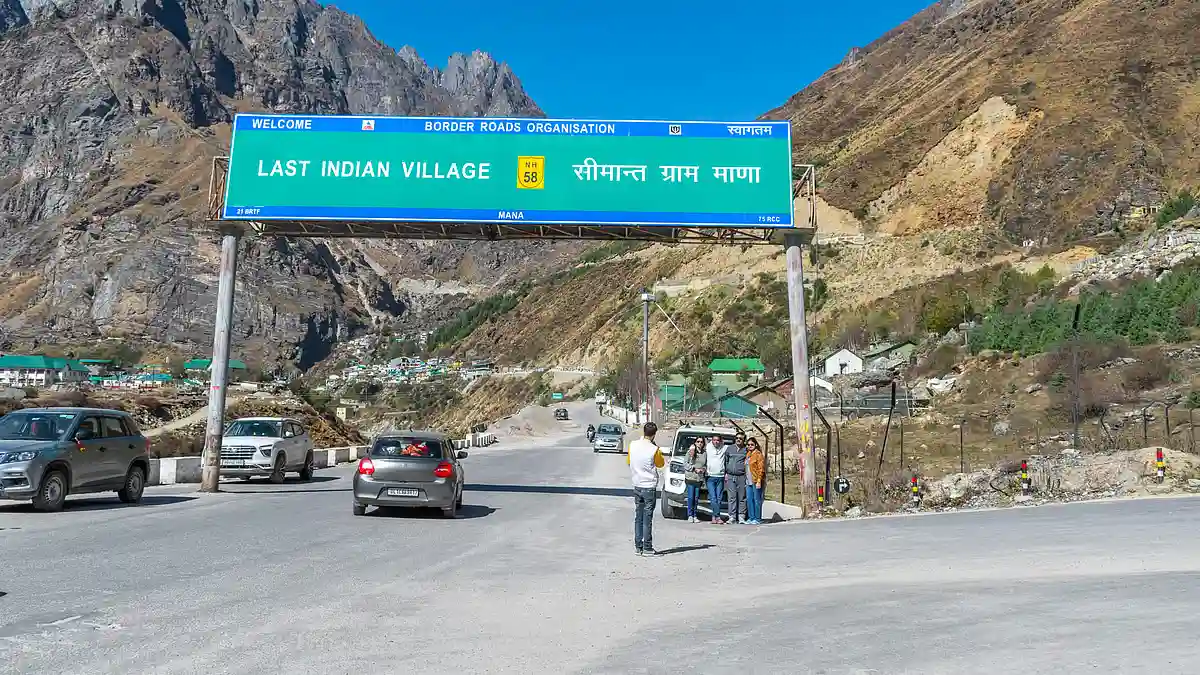
The Badrinath–Mana road is in good condition throughout the pilgrimage season and is the most reliably open route in the entire Badrinath area. It is a paved, two-lane mountain road maintained by the Border Roads Organisation (BRO) as part of the strategic Chamoli-Tibet border road network. Road conditions by season:
Season | Road Condition | Notes |
May–June (opening season) | Good; fully paved | Some lingering snow patches possible in early May near Mana — cleared by BRO before season |
July–August (monsoon) | Mostly good; occasional debris | Check same-day status; rare closures after heavy rain; significantly more stable than the main Badrinath highway |
September–October | Excellent — best condition of the season | Post-monsoon stability; highest confidence for day trip planning |
November (pre-closing) | Good but cold; frost on road at dawn | Take a later departure (after 8:30 AM) when frost has cleared; road remains open until kapat closing |
Check current road conditions: ask Hotel Royal Badri’s Anugraha Concierge for same-day conditions before departure. The concierge has direct contact with local drivers who travel this road daily and will flag any issues.
Where Can You Find Authentic Local Woollen Items in Mana Village?
The Bhotia community of Mana is known for hand-woven woollen items — shawls, blankets, caps, and socks made from wool sourced locally and from the wider Garhwal mountain region. Purchase directly from village women selling at stalls within the village lanes — this is the most direct way to support the local community and the most reliable source of authentically made items.
What to look for when buying woollen items in Mana:
- Handwoven shawls with traditional Bhotia patterns — these are made on frame looms within the village; machine-made alternatives are sometimes sold alongside them
- Woollen socks and gloves — genuinely useful for the cold Badrinath circuit and made in sizes for all ages
- Hand-spun woollen blankets — heavier to carry but a significant purchase if travelling by car rather than flight
- Namda felt items — pressed wool floor mats and small decorative items made using the traditional namda technique
How to identify authentic hand-woven items: slight irregularities in the weave pattern indicate hand production. Ask the seller to show you the weaving setup if they are making items on-site — several women weave in their courtyard during tourist hours. Machine-made items have perfectly uniform patterns and are typically sold in packaging; handmade items are sold loose.
Budget: woollen shawls run ₹300–₹1,500 depending on size and quality; socks and gloves ₹100–₹300 per pair; blankets ₹800–₹3,000. Prices are negotiable and cash is preferred — no cards or UPI accepted at village stalls.
Recommended Local Eateries in Mana Village for Lunch
Mana Village has a handful of small dhabas near the Vyas Gufa entrance that serve basic Sattvic meals — no meat, eggs, onion, or garlic, consistent with the Badrinath area’s culinary character. Options include:
- Simple thali (rice, dal, roti, vegetable) — the most reliably available meal at Mana dhabas; ₹80–₹150 per person
- Maggi and chai — basic refreshment option at most stalls near the cave entrance; ₹40–₹80
- Madua roti (finger millet flatbread) — a local Garhwali staple occasionally available at village dhabas; worth trying if available
Honest note on Mana dining: the dhabas are very simple — expect basic food at low prices, not a restaurant-quality meal. Many pilgrims carry a packed lunch from Akshaya Restaurant at Hotel Royal Badri for Mana visits, particularly families with children or specific dietary requirements. Ask the hotel kitchen for a packed lunch box before your 9:00 AM departure — this is the most practical solution.
Best Local Eateries After Visiting Mana Village on Return to Badrinath
The best post-Mana meal is breakfast or lunch at Akshaya Restaurant at Hotel Royal Badri upon return. For pilgrims who want to eat something in Badrinath town before returning to the hotel, the market street between the bus stand and the temple has several established dhabas serving Sattvic meals throughout the day. Hotel Royal Badri’s Akshaya Restaurant remains the most reliable option for quality and consistency.
Nearby Attractions to Visit Along With Mana Village
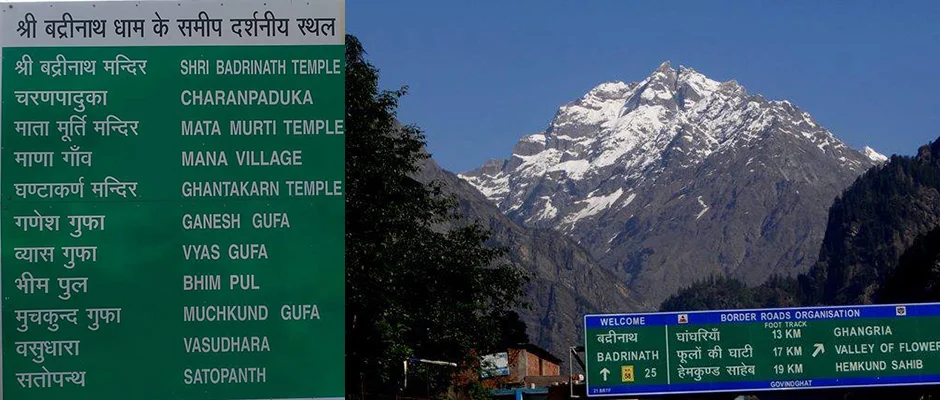
Attraction | Distance from Hotel Royal Badri | Time Required | Best Combined With Mana? |
Vyas Gufa & Ganesh Gufa | ~4.3 km (within Mana) | 20–30 min | Yes — core Mana visit |
Bheem Pul | ~4.5 km (Mana area) | 20 min round trip from village | Yes — walk from Mana Village |
Saraswati River emergence | ~4.0 km | 15 min | Yes — on route to/from Vyas Gufa |
Keshav Prayag | ~3.5 km | 15 min | Yes — en route to Mana by road |
Vasudhara Falls | ~8.5 km from hotel, 5.5 km from Mana | 3–4 hours round trip trek from Mana | Separate day recommended |
Satopanth Lake | ~20 km from hotel | Full day or overnight trek | Not combinable — separate dedicated trip |
Swargarohini base | ~24 km from hotel | Multi-day trek | Not a day trip |
For pilgrims who want to see Vasudhara Falls, note that the trek from Mana takes approximately 3 hours round trip on a trail that gains significant altitude. This is a full-day commitment best treated as a separate trip, not added to a Mana Village day trip that also includes the caves and village walk. See our Mana Village guide for the fuller history and legends.
How Do You Arrange a Seamless Return Trip to Hotel Royal Badri After Visiting Mana?
The most seamless return arrangement is a pre-booked private cab with driver waiting time — this eliminates any uncertainty about finding transport at Mana for the return journey. Hotel Royal Badri’s Anugraha Concierge books this for guests through the vetted driver network — confirm the arrangement the evening before and agree on a specific return time with the driver when you arrive at Mana.
For shared taxi return: shared taxis back to Badrinath depart from the Mana Village entrance area when full. In peak season and pre-closing October, taxis fill quickly and waits are short. In quieter September, you may wait 15–30 minutes for a shared taxi to fill. If you are on a tight afternoon schedule (wanting to be back for 4:00 PM temple darshan), the private cab with waiting time is the safer option.
Is It Possible to Pre-Book a Return Cab Service for a Mana Day Trip?
Yes — Hotel Royal Badri’s Anugraha Concierge pre-books return cab services for guests as part of the trip arrangement. Book the cab at the front desk or by calling 87960 35148. Specify: departure time from hotel, expected time at Mana, and required return time. The concierge coordinates this with the driver and provides his WhatsApp number so you can communicate directly during the trip.
What Are the Cultural Etiquette Tips for Visiting Mana Village?
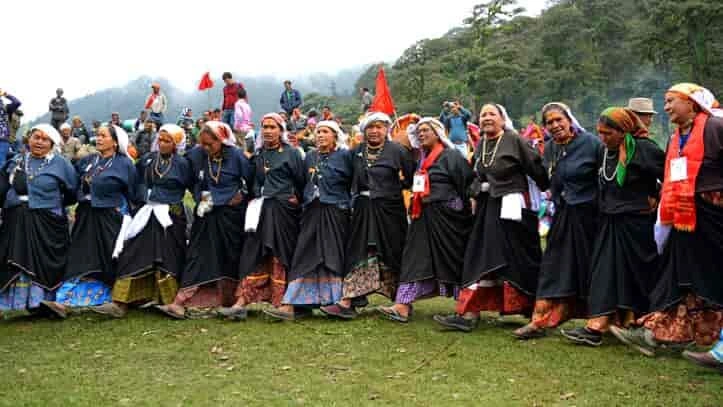
Mana Village is a living community — not a heritage site or tourist destination — and the Bhotia residents are active during the summer season. Follow these etiquette guidelines:
- Ask permission before photographing residents, their homes, or weaving work — some families welcome this, others do not; the respectful default is to ask
- Walk through the village lanes at a measured pace — do not rush through, and do not push through narrow lanes in large groups
- Purchase items from the person who made them where possible — buying directly from village women at their stall supports the local economy more directly than purchasing from middlemen at the village entrance
- Maintain silence inside Vyas Gufa and Ganesh Gufa — the caves are active religious sites, not museums; many pilgrims pray here
- Do not bring alcohol or non-vegetarian food to Mana Village — the community and the Char Dham context both call for Sattvic conduct
- Carry out all your waste — there are no municipal waste facilities in the village; leave no plastic, wrappers, or packaging
- Dress modestly — covered shoulders and below-knee clothing are appropriate for this religious and cultural context
Weather Forecast and Best Planning for a Mana Village Day Trip
Check the weather forecast on the morning of your planned Mana visit before departing — mountain weather can change faster than the general Badrinath forecast suggests. Use Windy (windy.com) or Skymet for hyper-local mountain forecasts. The key weather factors for a Mana day trip:
- Rain: the road to Mana is generally manageable in light rain; heavy rain in July–August can cause brief debris flows near the river banks — check road status before monsoon-season visits
- Cloud: morning cloud cover in July–August often clears by 10:00–11:00 AM, making a later departure more visually rewarding in monsoon months
- Wind: Mana sits in a wind corridor near the Mana Pass — the Bheem Pul viewpoint in particular can be very windy; carry an extra layer regardless of forecast
- Snow: late October and November visits may encounter frost or light snowfall near the village — the road itself remains passable until the kapat closing, but footwear with grip is essential
Travel Insurance for Day Trips from Hotel Royal Badri to Mana Village
A day trip to Mana Village falls within the standard coverage of any domestic travel insurance policy covering Badrinath — no separate day-trip insurance is required. Your pilgrimage travel insurance (covering the Badrinath trip as a whole) automatically covers activities like Mana Village visits, cave exploration, and the Bheem Pul walk as part of the same journey. Specific considerations:
- Verify your policy covers high-altitude activities above 3,000 metres — Mana Village sits at ~3,200 metres
- Trekking to Vasudhara Falls (if you extend beyond Mana village) may require a trekking endorsement on some policies — check if combining a falls trek with the Mana visit
- Medical evacuation coverage remains relevant at Mana’s altitude — the nearest hospital is Civil Hospital Joshimath, 46+ km away
- No specialist insurance is needed for the standard Mana Village village walk and cave visits
For travel insurance recommendations for the full Badrinath pilgrimage trip, see our family Char Dham Yatra guide which covers the insurance section in detail.
More Day Trip and Sightseeing Guides From Pilgrims Habitat
Related guides for your Badrinath area exploration: Badrinath to Mana Village – History & Legends · Sunrise at Neelkanth Peak – Best Viewpoints · Tapt Kund & Brahma Kapal Walking Tour · Best Time to Visit Badrinath · Is Badrinath Safe During Monsoon? · Hotel Royal Badri – Rooms & Booking
Frequently Asked Questions: Mana Village Day Trip from Hotel Royal Badri
Shared taxi (₹100–₹200/person, departs when full from near Badrinath bus stand) or private cab (₹700–₹1,200 round trip with waiting time). Private cab arranged through Hotel Royal Badri’s Anugraha Concierge gives the most flexibility. Walking is possible but not recommended for most pilgrims given the 3 km mountain road and altitude gain.
Vyas Gufa (Vyasa’s cave where the Mahabharata was composed), Ganesh Gufa (Ganesha’s transcription cave), Saraswati river emergence point, Bheem Pul (natural rock bridge across the Saraswati), Keshav Prayag (Saraswati-Alaknanda confluence), and the traditional Bhotia stone village architecture with live weaving displays.
Contact Hotel Royal Badri’s Anugraha Concierge at 87960 35148 the evening before your planned visit. The concierge books a vetted local driver with the vehicle type of your choice (typically a Bolero or Innova for mountain road comfort), confirms the round-trip rate, and provides the driver’s WhatsApp for direct communication during the trip.
Book through Hotel Royal Badri’s Anugraha Concierge — call 87960 35148 or visit the front desk the evening before. The concierge arranges a Uttarakhand Tourism-registered local guide (₹800–₹1,500 for a half-day Mana circuit) plus a driver. Alternatively, approach registered guides at the Badrinath parking area or Mana Village entrance — always ask for Tourism Department ID before hiring.
Shared taxi: ₹100–₹200 per person one way. Private cab one way: ₹400–₹700. Private cab round trip with 3–4 hours waiting at Mana: ₹700–₹1,200. These are 2026 season indicative rates — confirm the exact fare with the driver before departure and agree on the return waiting arrangement in advance.
Google Maps (download the Chamoli district offline map before losing signal) gives reliable navigation to Mana Village. Save the route while you have connectivity in Badrinath — signal becomes less reliable beyond the village. For day-trip planning, Windy (weather) and the Uttarakhand Tourism app are useful supplements.
The recommended departure time is 9:00–9:30 AM, after breakfast and any morning darshan. This timing reaches Mana before the peak 10:00 AM–1:00 PM crowd window, allows a 3–4 hour visit, and returns the pilgrim to Hotel Royal Badri by 2:00–2:30 PM — comfortably before the 4:00 PM temple reopening.
Book through Hotel Royal Badri’s Anugraha Concierge for vetted drivers at fair rates (₹700–₹1,200 round trip with waiting). Alternatively, negotiate directly with GMOU-registered cab drivers at the Badrinath parking area — ₹600–₹1,000 for a round trip with waiting time is a reasonable target. Always agree on the total price including waiting before you get in.
Simple Sattvic dhabas near Vyas Gufa serve thali (₹80–₹150), Maggi and chai (₹40–₹80), and occasionally local Garhwali dishes like madua roti. For a more reliable meal, ask Hotel Royal Badri’s kitchen to prepare a packed lunch box before your 9:00 AM departure — this is the most practical option for families and those with specific dietary needs.
The Badrinath–Mana road is in good-to-excellent condition throughout the pilgrimage season. It is a paved BRO-maintained road without difficult hairpin sections. Best conditions are September–October. Monsoon months (July–August) occasionally see light debris but remain far more stable than the main Badrinath highway. Check same-day conditions with Hotel Royal Badri’s concierge before monsoon-season visits.
15–20 minutes by vehicle under normal conditions. In peak season (June) or during the Navratri and pre-closing October rush, traffic adds 5–10 minutes. The road distance is approximately 3 km from the hotel. The walk takes 45–60 minutes each way and is not recommended for most pilgrims given altitude and return incline.
No — bike and scooter rental is not available from Hotel Royal Badri, and two-wheelers are not advised for the Mana road due to mountain terrain, mixed traffic, and altitude considerations. A shared or private cab is the appropriate transport for all pilgrims.
Purchase directly from Bhotia village women selling at stalls within the village lanes — this gives you authentic handwoven items and directly supports the local community. Look for slight weave irregularities that indicate hand production. Shawls run ₹300–₹1,500; socks and gloves ₹100–₹300; blankets ₹800–₹3,000. Cash only — no cards or UPI at village stalls.
Use Windy (windy.com) for hyper-local mountain weather forecasts — set the location to Mana Village or Chamoli district. Skymet provides regional mountain forecasting. The morning of your planned visit, check the forecast and ask Hotel Royal Badri’s concierge for same-day local conditions before departing.
Yes — Hotel Royal Badri’s Anugraha Concierge pre-books round-trip cab arrangements for guests, including a specific return time agreement with the driver. This eliminates any uncertainty about finding transport at Mana for the return. Book the evening before at the front desk or by calling 87960 35148.
Within the Mana day trip: Vyas Gufa, Ganesh Gufa, Bheem Pul, Saraswati emergence point, and Keshav Prayag — all within 4.5 km of Hotel Royal Badri. Vasudhara Falls (8.5 km) requires a 3-hour trek from Mana and is best treated as a separate full-day trip. Satopanth and Swargarohini are multi-day treks — not combinable with a Mana day trip.
Visit Vyas Gufa and Ganesh Gufa before 11:00 AM — both caves are coolest, least crowded, and most contemplative in the morning hours. The cave pujari conducts morning aarti before 9:30 AM. After 10:00 AM, pilgrim groups arrive in higher numbers. The caves quieten again after 2:00 PM.
Pre-book a private cab with waiting time through Hotel Royal Badri’s Anugraha Concierge — the driver waits at Mana and returns you at a pre-agreed time. Alternatively, take a shared taxi from the Mana Village entrance area back to Badrinath (₹100–₹200 per person; departs when full). For time-sensitive return (to make 4:00 PM darshan), the private cab option removes all uncertainty.
Ask permission before photographing residents. Walk through lanes at a measured pace. Purchase from village women directly. Maintain silence inside the caves. Bring no alcohol or non-vegetarian food. Carry out all waste — no disposal facilities exist in the village. Dress modestly with covered shoulders and below-knee clothing appropriate for a religious and cultural context.
Your existing Badrinath pilgrimage travel insurance covers a Mana Village day trip automatically — no separate policy is needed. Verify the plan covers altitudes above 3,000 metres. If extending to Vasudhara Falls trek (separate trip), check whether a trekking endorsement is required. HDFC ERGO, Bajaj Allianz, Care Health, and Tata AIG are the most commonly used plans for Char Dham high-altitude coverage.
All Ccategories
Recent Post
-
 30 Sep 2026 Badrinath Travel GuideBadrinath Hotel WiFi and Mobile Network: What NRIs Should Know Before They Go
 -
 30 Sep 2026 Badrinath HotelsBadrinath Hotel With Mountain View: A Photographer's Guide to Rooms, Light and Timing
 -
 30 Sep 2026 Badrinath HotelsHow to Book Badrinath Hotel From Abroad: Cards, UPI and Payment Tips
 -
 30 Sep 2026 Badrinath HotelsBest Hotels Near Badrinath Temple Compared: Distance, Comfort and Who Each Suits
 -
 30 Sep 2026 Badrinath HotelsBest Hotel in Badrinath for NRIs Travelling With Elderly Parents
Plan Your Mana Village Day Trip From Hotel Royal Badri
Hotel Royal Badri – A Pilgrim’s Habitat is your closest comfortable base to Mana Village — 3 km from India’s last village, with the Anugraha Concierge handling your driver, guide, and morning packed lunch so your day trip requires no advance logistics beyond telling us when you want to go.
Book Hotel Royal Badri Directly · Call / WhatsApp: 87960 35148 · Email: reservations@pilgrimshabitat.com
Delhi Office: Unit no. 6, Tribhuwan Complex, Ishwar Nagar, Friends Colony, Delhi – 110065 | Business: Manish.kumar@pilgrimshabitat.com | 87960 35148

7 Responses