

Best Time to Visit Badrinath and Kedarnath: Month-by-Month Weather and Crowds
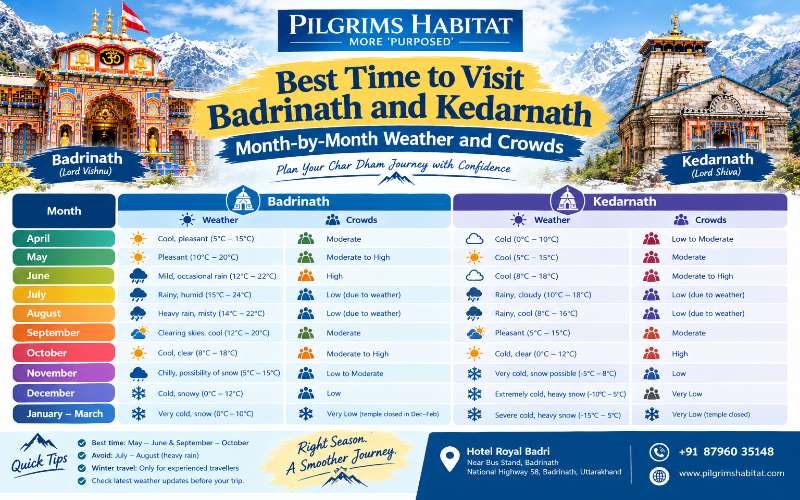
The best time to visit Badrinath and Kedarnath together is mid-May to June or mid-September to mid-October. Both temples are open, roads are usually clear, and daytime temperatures at Badrinath sit between about 15°C and 20°C. Avoid July and August if you can, because monsoon landslides regularly close the roads. Late October and November are crisp and beautiful but very cold, and Kedarnath closes a few days before Badrinath.
Below is the month-by-month detail, with temperatures, crowd levels and our recommendation for each kind of traveller.
When are Badrinath and Kedarnath open?
Both temples open for about six months each year:
- Opening: Late April or early May. Kedarnath usually opens around Akshaya Tritiya. Badrinath’s date is announced on Basant Panchami, typically in February.
- Closing: Kedarnath usually closes around Bhai Dooj, just after Diwali. Badrinath closes a few days to a couple of weeks later, in November, with the date announced on Vijayadashami (Dussehra).
So if you plan to visit both late in the season, do Kedarnath first and check the announced closing dates before you book. Our guide to the kapat closing covers the closing rituals.
Which is higher, Kedarnath or Badrinath?
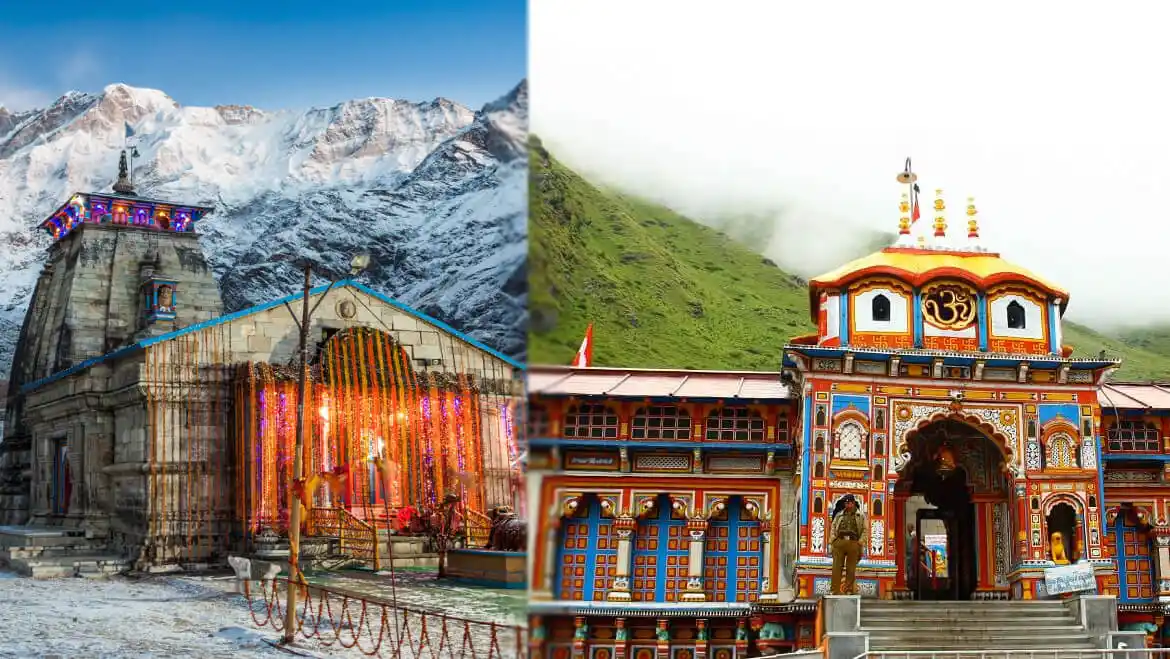
Kedarnath is higher. Kedarnath temple stands at about 3,583 m, while Badrinath is at about 3,133 m, roughly 450 m lower. Kedarnath also means a 16 to 18 km uphill trek from Gaurikund, while Badrinath is reachable by road. In practice, Kedarnath feels colder and more exposed, especially in early mornings and after rain.
Month-by-month weather at Badrinath
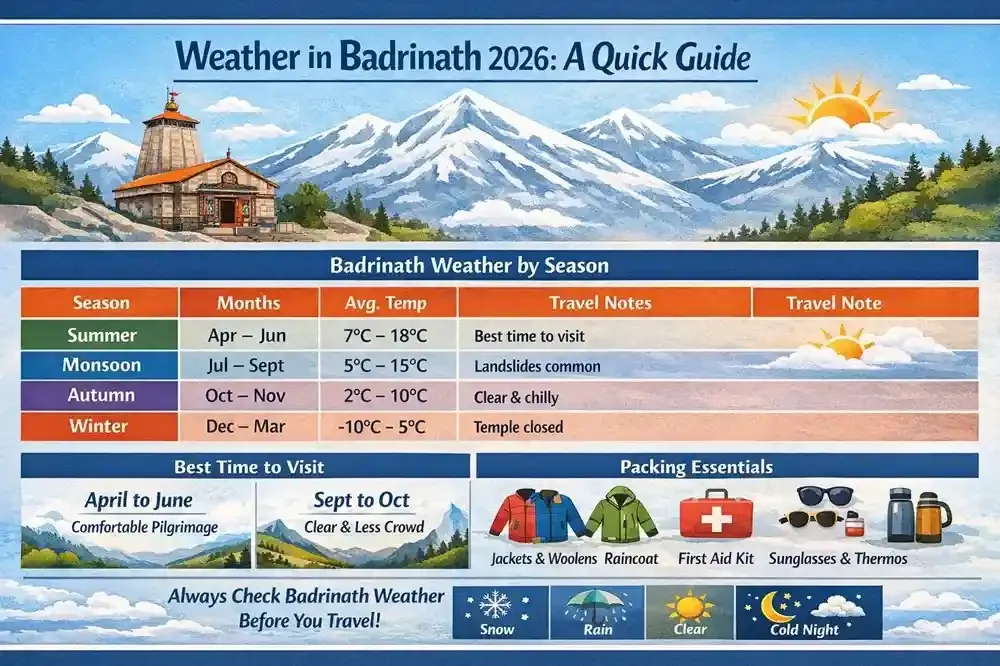
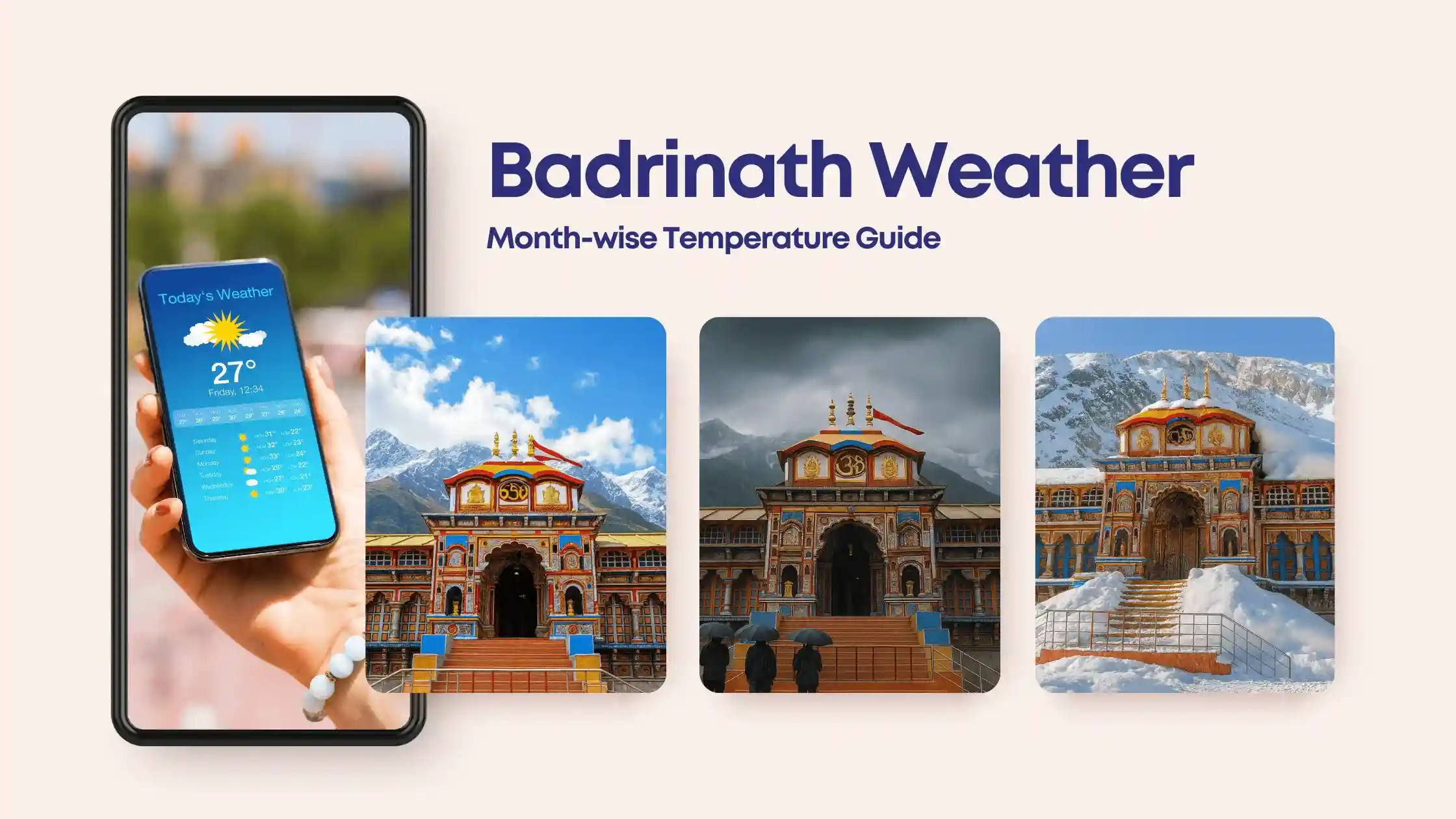
These are long-term average temperatures and rainfall for Badrinath. Kedarnath runs a few degrees colder than these figures at the same time of year.
Month | Avg max | Avg min | Rain (mm) | Temple | Crowds | Our verdict |
|---|---|---|---|---|---|---|
April | 15°C | 3.6°C | 77 | Opens late April/May | Building | Only if opening day matters to you |
May | 18.6°C | 6.7°C | 54 | Open | Very heavy | Good weather, book early |
June | 20.4°C | 9.6°C | 102 | Open | Heavy | Warmest month, school holiday crowds |
July | 19.1°C | 10.8°C | 325 | Open | Light | Monsoon, high landslide risk |
August | 18.6°C | 10.8°C | 312 | Open | Light | Monsoon, high landslide risk |
September | 17.1°C | 8.1°C | 188 | Open | Moderate | Good from mid-month |
October | 13.7°C | 3.0°C | 63 | Open | Moderate | Best views and clear skies |
November | 9.7°C | -0.6°C | 45 | Closes mid-month | Rising before closing | Very cold, short window |
December to March | 4°C to 10°C | Below 0°C | 67 to 163 | Closed | — | Temple closed, heavy snow |
May and June: peak season
This is when most of India travels, and it shows.
Pros: Stable weather, long days and snow still on the peaks. Every service is running: buses, helicopters, ponies at Kedarnath, all hotels.
Cons: The biggest crowds of the year, especially in the opening weeks and during school holidays. Darshan queues at both temples can run for hours. Hotel prices peak and good rooms sell out weeks ahead.
Best for: Families tied to school holidays and pilgrims who want the opening-season atmosphere.
Tip: If you’re going in May or June, book hotels at least 6 to 8 weeks ahead and plan very early morning darshan.
July and August: monsoon
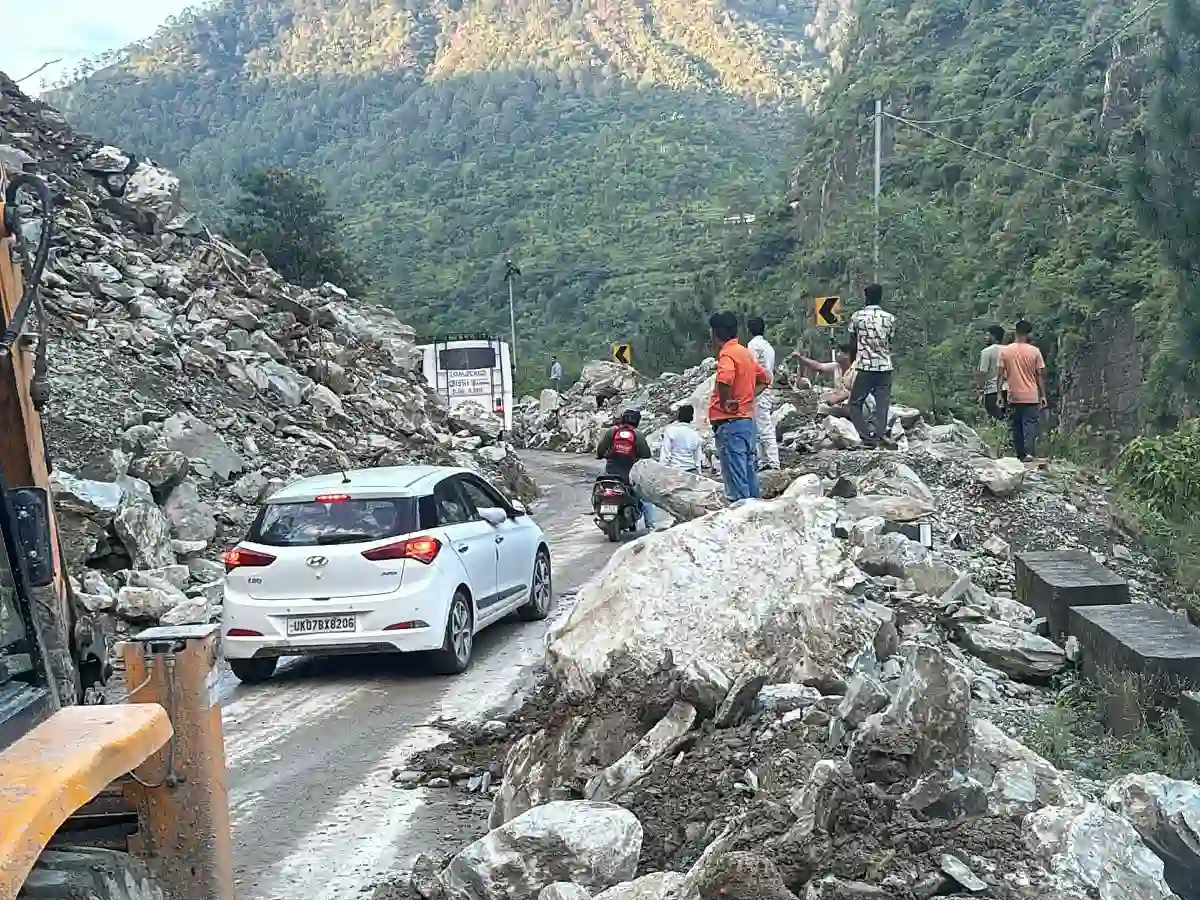
Pros: Few crowds and green valleys. Hotel rates soften.
Cons: Heavy rain, around 300 mm a month at Badrinath. Landslides can close the highway for hours or days, particularly around Joshimath and on the Kedarnath route near Sonprayag. Helicopter flights are frequently cancelled. Views are often hidden in cloud.
Best for: Flexible travellers with spare days and no fixed return flight.
If you do travel in the monsoon, read our monsoon safety guide, keep two buffer days and watch district road advisories.
September and October: the sweet spo
This is our favourite time, and many local hoteliers and guides agree.
Pros: The monsoon clears through September. October brings the clearest skies of the year, sharp views of Neelkanth peak, and moderate crowds after the summer rush. Daytime temperatures at Badrinath are pleasant, around 14°C to 17°C.
Cons: Nights get cold, dropping to around 3°C at Badrinath in October and lower at Kedarnath. Early September can still bring rain. Festival weeks around Navratri and Dussehra get busy.
Best for: Almost everyone, including seniors who prepare for cold nights.
For more on this window, see Badrinath in October.
November: the closing weeks
Pros: Small crowds, very clear skies and the closing ceremonies, which many pilgrims consider especially auspicious.
Cons: Average lows drop below freezing at Badrinath and colder at Kedarnath. Kedarnath closes first, around Bhai Dooj, so a Do Dham trip in November needs careful timing. Some hotels and services start winding down.
Best for: Pilgrims who specifically want to witness the closing and are prepared for serious cold.
How the weather shapes a single day
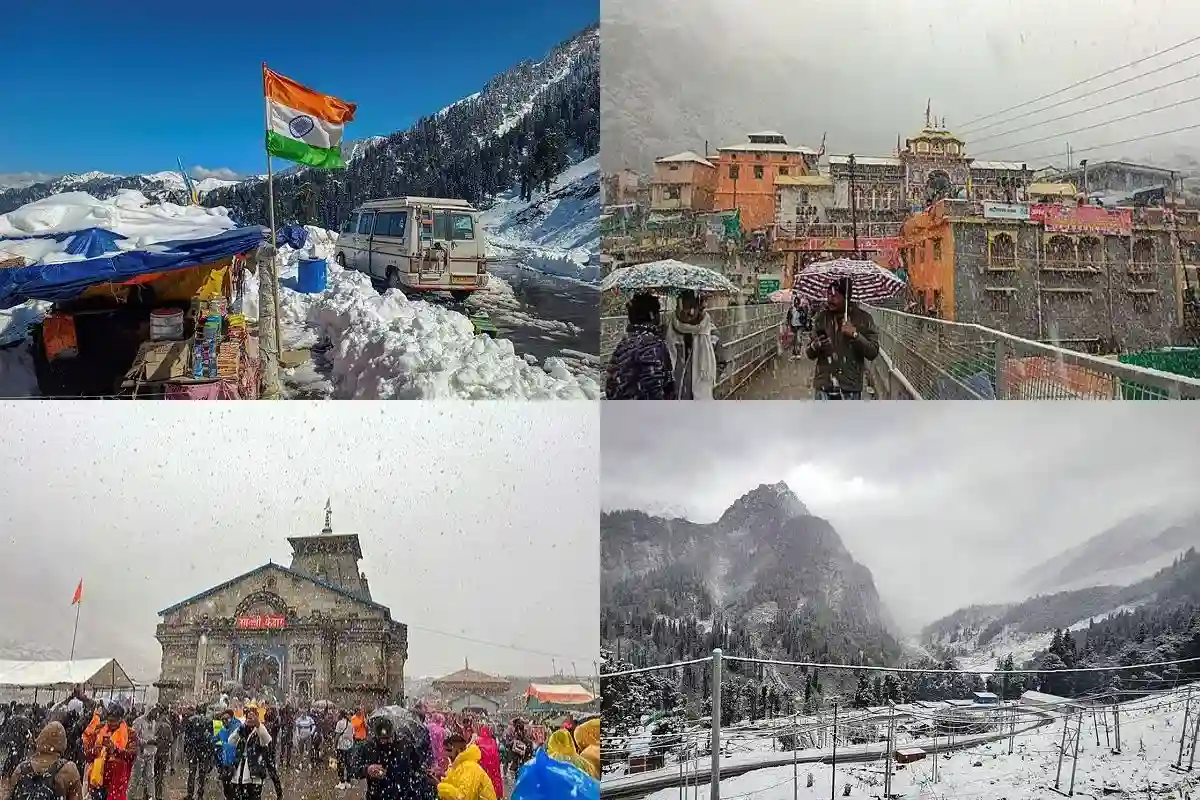
Season matters, but so does the hour. On most days at Badrinath, mornings are clear and still, which is when Neelkanth peak shows best and helicopters fly most reliably. Clouds tend to build after midday, and afternoon showers are common even outside the monsoon. Evenings cool down quickly once the sun drops behind the ridges.
At Kedarnath the pattern is similar but sharper: start the trek early, aim to reach the temple by early afternoon, and carry rain gear in every month. Plan your darshan, treks and drives for the morning, and keep afternoons for rest.
The best time for different travellers
Traveller | Best window | Why |
|---|---|---|
Families with school children | Late May to June | Matches school holidays; stable weather |
Senior citizens | Mid-September to mid-October | Fewer crowds, stable weather, manageable cold with heating |
Photographers | October | Clearest skies and sharp peaks |
Budget travellers | Early July or late September | Lower hotel rates (accept the rain risk in July) |
First-time Do Dham pilgrims | Mid-September to early October | Best balance of weather, crowds and open services |
NRIs flying in | Late September to October | Fits post-monsoon flights and Diwali travel |
Festival weeks that change the crowd picture
A quiet month can turn busy for a few days around a festival. Janmashtami and Raksha Bandhan (usually August) bring regional crowds even in the monsoon. Navratri and Dussehra in October fill hotels across the route, and the days around Diwali, when Kedarnath prepares to close, are busy at both dhams. If you’re travelling in one of these windows, book stays early and expect longer darshan queues. Our Navratri at Badrinath guide covers what that week is like.
Planning a Do Dham trip around the season

For a Kedarnath and Badrinath trip, allow 6 to 7 days from Haridwar, and more in the monsoon. Our Do Dham itinerary has day-by-day plans. For route options, see how to reach Badrinath.
If you’re only visiting Badrinath, our Badrinath-only seasonal guide goes into more detail on opening dates and the Badrinath weather.
What to pack, whatever the month
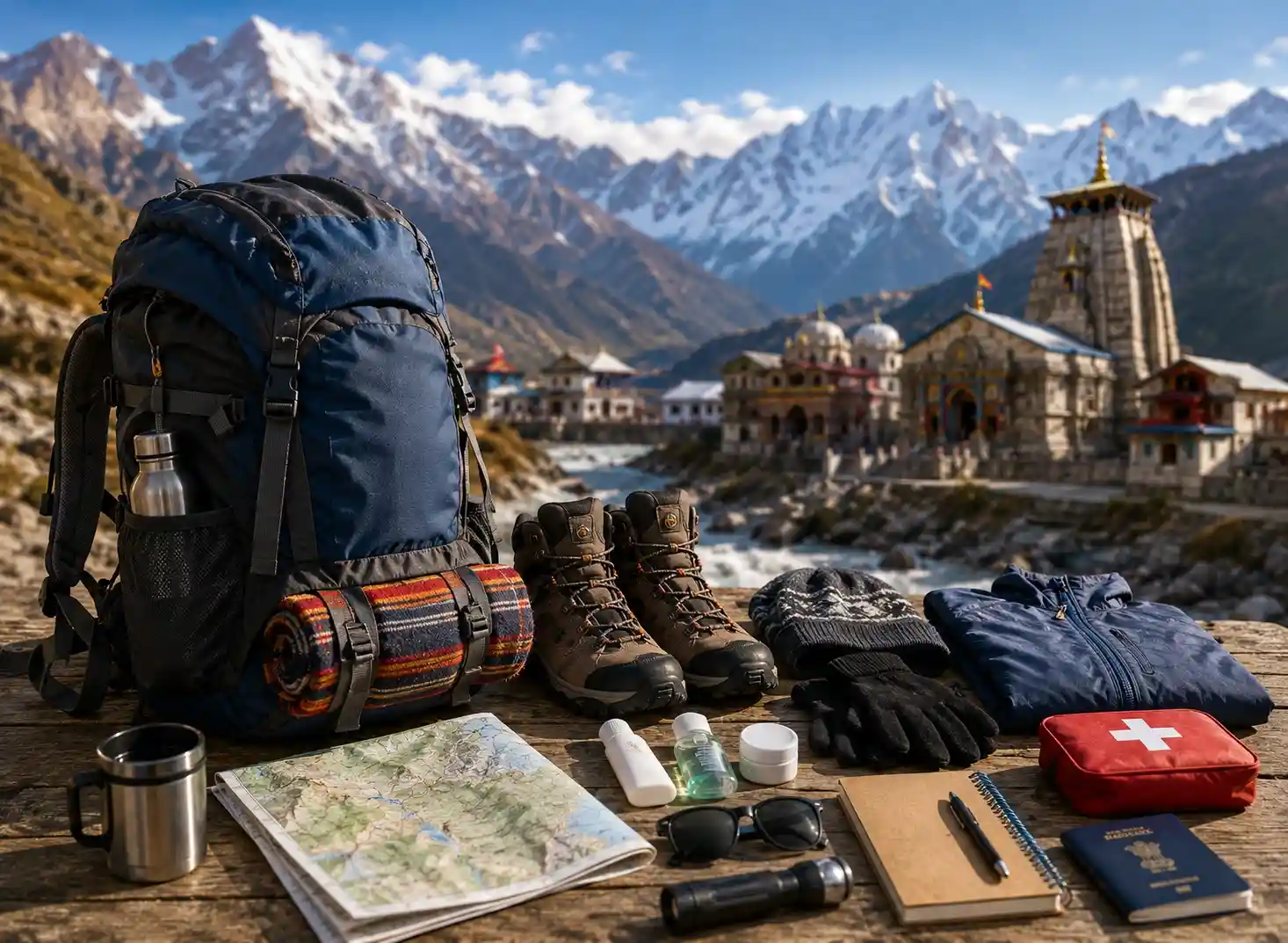
- Thermal innerwear, a warm jacket, cap and gloves, even in June
- Rain jacket and quick-dry layers from late June to mid-September
- Good walking shoes for Kedarnath, plus a walking stick
- Sunscreen and lip balm, because UV is strong at altitude
- Personal medicines and a basic first-aid kit
Our packing list covers the rest.
Kedarnath Badrinath jaane ka sabse achha samay
Kedarnath aur Badrinath dono jaane ke liye mid-May se June aur mid-September se mid-October sabse achha samay hai. July aur August mein baarish aur landslide ka khatra rehta hai. October mein aasmaan saaf aur bheed kam hoti hai, lekin raatein thandi hoti hain. Kedarnath, Badrinath se pehle band hota hai, isliye November mein pehle Kedarnath jaiye.
Frequently Asked Questions (FAQs)
Mid-May to June and mid-September to mid-October are the best months for visiting Badrinath and Kedarnath together. Both temples are open, weather is stable and roads are usually clear. October offers the clearest skies and moderate crowds, while May and June are busiest.
You can visit in July, but it’s the riskiest month. Monsoon rain regularly causes landslides that close roads near Joshimath and Sonprayag, and helicopter flights get cancelled. If you go, keep two spare days, avoid driving after dark and check district road advisories daily.
Kedarnath usually closes around Bhai Dooj, just after Diwali. Badrinath closes a few days to a couple of weeks later, in November, on a date announced each year on Vijayadashami. If you’re visiting both late in the season, do Kedarnath first.
Kedarnath is colder. It sits at about 3,583 metres, around 450 metres higher than Badrinath at 3,133 metres, and is more exposed. Expect Kedarnath to run a few degrees colder than Badrinath at the same time of year, especially early mornings and evenings.
In October, Badrinath averages a maximum of around 14°C and a minimum of around 3°C. Days are sunny and clear, but nights get cold, so heated rooms and warm layers are important. Kedarnath is a few degrees colder at the same time.
Mid-September to mid-October is the least crowded time with good weather. July and August are also quiet, but only because the monsoon keeps many people away. Avoid the opening weeks in May and the June school holidays if you want short darshan queues.
Yes, but only in early November, and you need to check the closing dates. Kedarnath closes first, around Bhai Dooj. Badrinath stays open a little longer. Temperatures at Badrinath fall below freezing at night, so carry heavy winter clothing and book a heated room.
May has good weather and both temples are open, but it’s the busiest month, especially in the first weeks after opening. Expect long darshan queues, high hotel prices and heavy traffic. Book stays 6 to 8 weeks ahead and plan very early morning darshan.
Both temples usually open in late April or early May. Kedarnath typically opens around Akshaya Tritiya, and Badrinath’s opening date is announced on Basant Panchami, usually in February. Check the official announcement before booking travel for the opening weeks.
Snow is common in the opening weeks of late April and May, and again from late October into November before the temple closes. During peak summer and the monsoon, snow stays on the surrounding peaks but rarely falls in the town itself.
All Categories
Recent Post
-
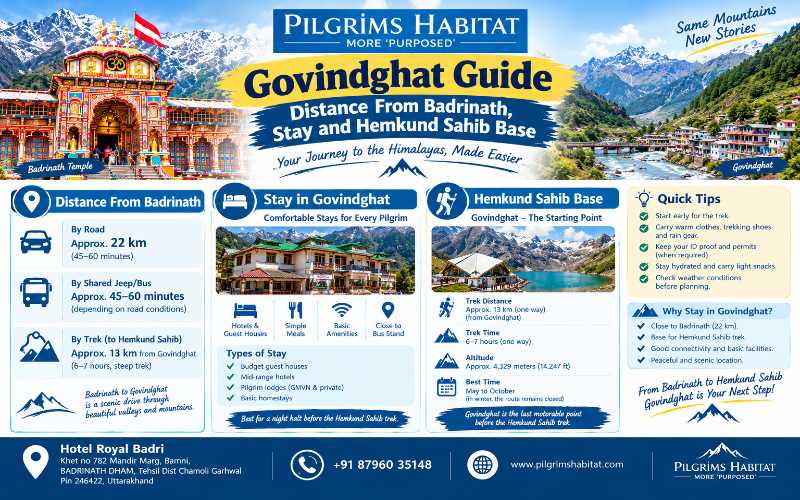 26 Oct 2026 UncategorizedGovindghat Guide: Distance From Badrinath, Stay and Hemkund Sahib Base
-
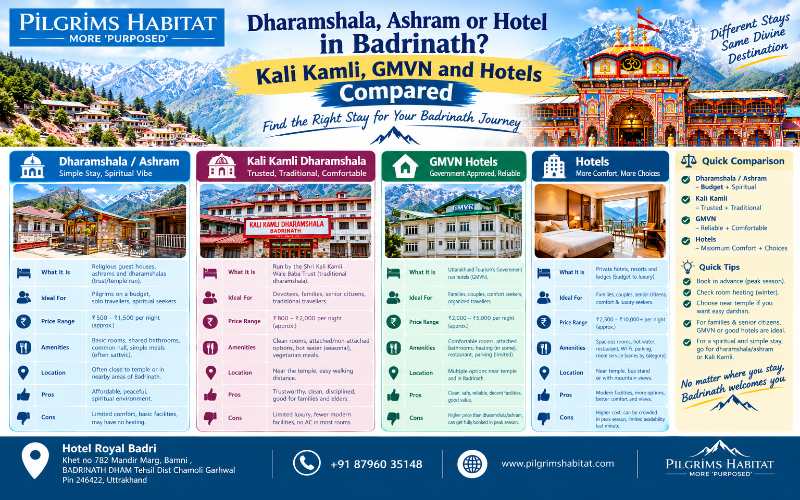 23 Oct 2026 UncategorizedDharamshala, Ashram or Hotel in Badrinath? Kali Kamli, GMVN and Hotels Compared
-
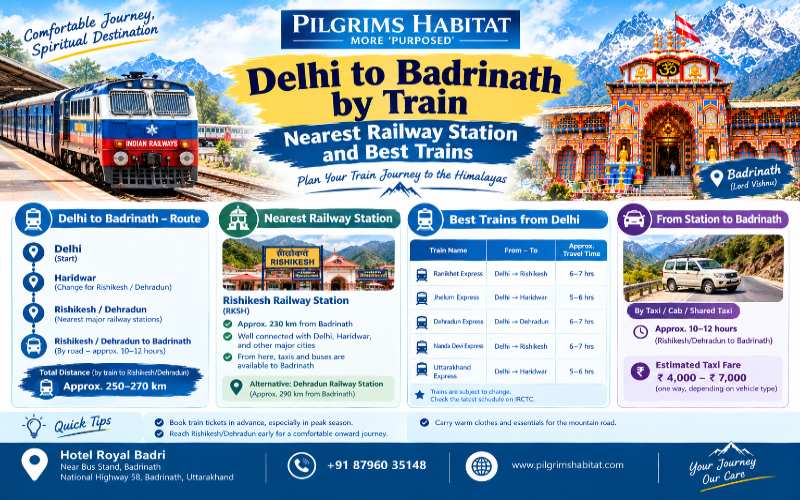 22 Oct 2026 UncategorizedDelhi to Badrinath by Train: Nearest Railway Station and Best Trains
-
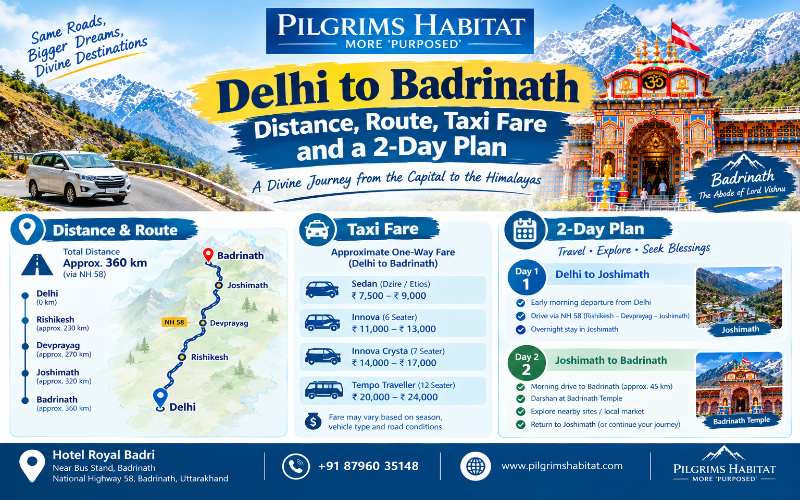 21 Oct 2026 UncategorizedDelhi to Badrinath: Distance, Route, Taxi Fare and a 2-Day Plan
-
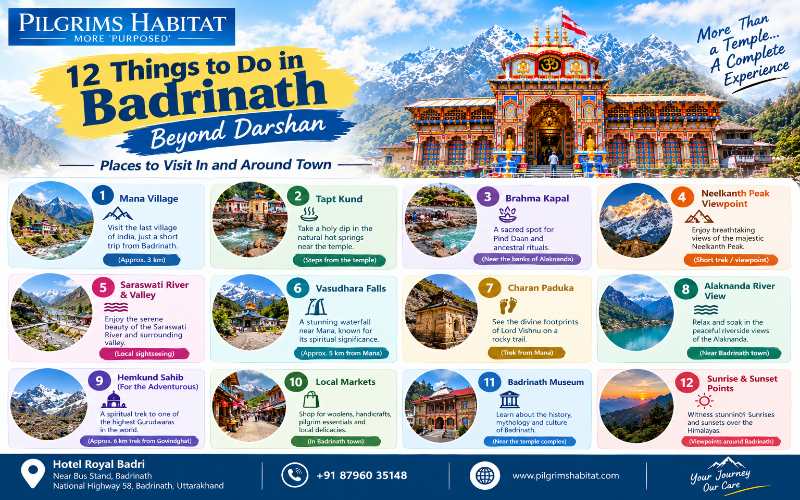 19 Oct 2026 Uncategorized12 Things to Do in Badrinath Beyond Darshan: Places to Visit In and Around Town
Pick your month, we'll keep you warm
Hotel Royal Badri is about 900 m from Badrinath temple, on the main road near the bus stand, with winter comfort in the rooms, Sattvik meals at Akshaya and a rooftop view of the peaks from our Ambar Sky Cafe. See Hotel Royal Badri or WhatsApp +91 87960 35148 to check availability for your month.

5 Responses